
Owner Explainer: Tesla Home Charging—Mobile Connector vs. Wall Connector
Owner Explainer · Tesla Primary Documentation + DOE Context

Choose a Tesla Mobile Connector when portability or an existing approved outlet meets daily mileage. Choose a Tesla Wall Connector when a permanent installation, connected controls or higher supported power matters. The right Tesla home charging setup depends on the car, circuit and utility rate—not only the hardware’s headline charging speed.
30-Second Brief
- This Owner Explainer is dated September 5, 2026 in America/Los_Angeles. It summarizes current documentation and does not claim the charging products changed today.
- Tesla lists Mobile Connector at roughly 2–3 miles of range per hour on a standard 120-volt outlet and up to 30 miles per hour with a suitable approved 240-volt outlet.
- Wall Connector can provide up to 11.5 kW at 48 amps and up to 44 miles per hour, but vehicle and circuit limits can reduce that rate.
- For Model 3 Rear-Wheel Drive and Model Y Rear-Wheel Drive, Tesla lists a 32-amp maximum, so the supported 240-volt options can be equal in headline speed.
- Have a qualified electrician assess the circuit, panel, permits and cable route; then schedule charging around the actual utility tariff.
What Happened
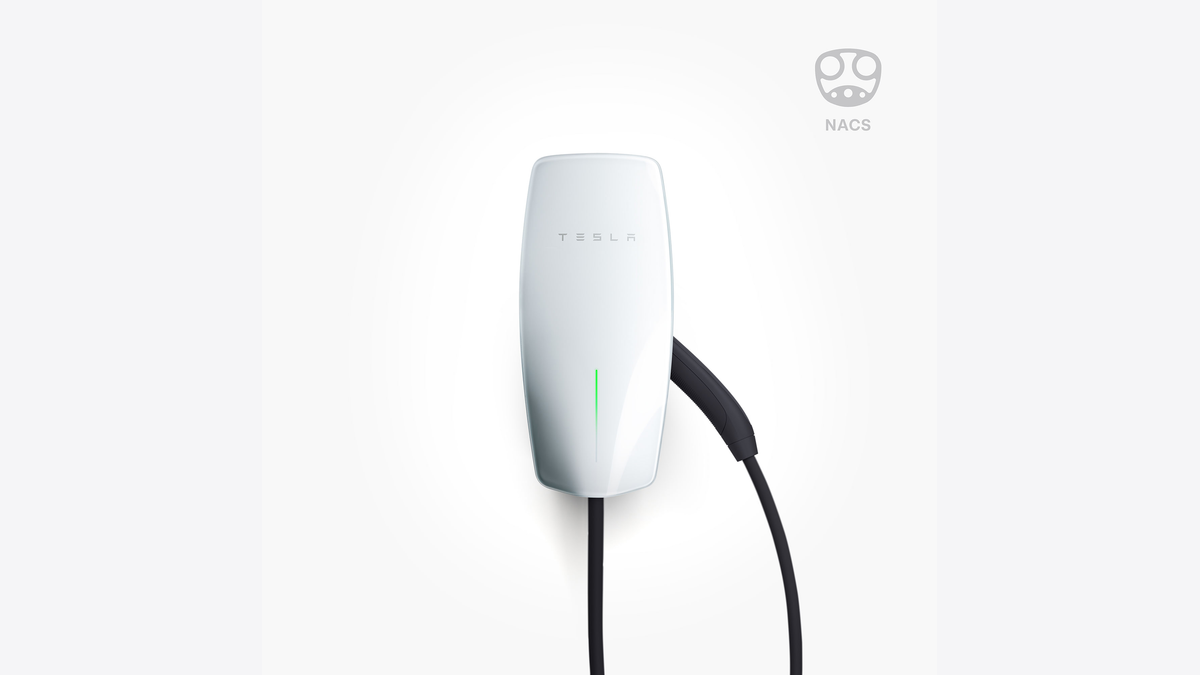
Tesla’s current Home Charging documentation puts Mobile Connector, Wall Connector and Universal Wall Connector side by side. The useful decision is not simply portable versus installed: owners must compare available electrical power, vehicle limits, nightly driving, installation work, cable reach and app features.
This article enters publication as a policy-required fallback explainer after five complete no-publication hours while the Los Angeles daily count remained below four. Its facts come from current documentation, not a same-window product announcement.
What Is Confirmed
- Standard outlet: Tesla says Mobile Connector with the included NEMA 5-15 adapter can add about 2–3 miles of range per hour from a 120-volt household outlet.
- Approved 240-volt outlet: Tesla lists Mobile Connector at up to 30 miles of range per hour when the outlet, adapter, circuit and vehicle support it.
- Wall Connector ceiling: Tesla lists up to 11.5 kW at 48 amps and up to 44 miles per hour. These are maximums, not guarantees.
- Vehicle limits matter: Tesla identifies a 32-amp maximum for Model 3 Rear-Wheel Drive and Model Y Rear-Wheel Drive, making up to 30 miles per hour the listed ceiling for those configurations.
- Scheduling: Tesla’s current manual supports location-based Start at and End by schedules. Scheduled charging is ignored at fast chargers, including Superchargers.
- Installation context: DOE advises using a qualified electrician and notes that permitting, panel capacity, cable routing and time-of-use pricing can affect the project.
What Remains Unconfirmed
No support table can determine the exact cost or charge rate at an individual address. Panel capacity, circuit length, local code, utility service, installation labor, ambient conditions and the vehicle’s onboard charger all matter. Tesla’s miles-per-hour figures are approximate.
Nor does the higher Wall Connector ceiling mean every owner benefits from a 48-amp installation. A lower-power vehicle, short daily commute or expensive service upgrade can change the practical answer. A site-specific electrical assessment and quote are required.
Why It Matters
Home charging is usually judged by whether the car can recover the next day’s driving while parked, not by the fastest number on the product page. A 120-volt outlet may be too slow for a long commute, while a supported 240-volt circuit may cover the same use without the highest-power installation.
Scheduling can be as important as hardware. If a utility uses time-of-use rates, an owner can move energy into cheaper hours. Tesla also says setting an End by time near departure can reduce the energy needed to warm a battery that otherwise finished charging much earlier.
What Tesla Owners Should Know
- Measure daily demand. Use typical miles and worst routine days, not only annual averages.
- Check the vehicle limit. Read the model-specific charging table and touchscreen maximum amperage before sizing the circuit.
- Inspect the electrical path. Ask a qualified electrician about panel capacity, breaker size, outlet condition, cable length, permits and local code.
- Avoid casual outlet assumptions. An existing 240-volt receptacle should be approved for the sustained charging load and matched to the correct adapter.
- Plan cable reach and parking. Tesla lists a 20-foot Mobile Connector cable and 24-foot Wall Connector cable in its U.S. comparison.
- Match the tariff. Program charging around the utility’s actual weekday, weekend, seasonal and demand-charge rules.
- Test after installation. Confirm charging current, connector reach, app reporting and scheduled behavior before relying on the setup.
Tesstudio Analysis
Tesstudio scores this explainer at 72.5. Tesla’s current support pages and owner manual directly verify the hardware limits, scheduling rules and model-specific boundaries, while DOE supplies independent installation and rate context. It remains below the normal new-story threshold because there is no fresh launch or configuration change.
The best value test is simple: choose the least complex properly installed system that reliably replaces expected daily driving during the vehicle’s normal parking window. Pay for more power or connected features when they solve a real constraint.
Related Tesla News Resources
Owners who already have Wall Connector can use Tesstudio’s Wall Connector app, scheduling and access-control guide. For public and Supercharger sessions, see the charging billing verification explainer. No Related Gear placement is included because installation suitability is address-specific.
Sources & Reporting Notes
- Tesla: Home Charging — primary comparison for hardware, installation ranges, cables, speeds, compatibility, warranty and the two official product images.
- Tesla: Wall Connector — primary power, amperage, vehicle-limit, app, access-control and installation documentation.
- Tesla Model 3 Owner’s Manual: Scheduled Precondition and Charge — primary scheduling, Start at, End by, fast-charger and preconditioning rules.
- U.S. Department of Energy Alternative Fuels Data Center: Charging Electric Vehicles at Home — independent public guidance on electrical installation and charging-cost inputs.
Reporting note: Tesla product speeds are identified as approximate company specifications. The article does not provide electrical-design advice; local code, the actual home and the actual vehicle govern installation. The official product images are resized without altering their content.
Update & Correction Log
September 5, 2026: Initial Owner Explainer, published in mandatory fallback mode after five complete no-publication hours and with two Tesla News posts on the America/Los_Angeles day.




コメントを書く
このサイトはhCaptchaによって保護されており、hCaptchaプライバシーポリシーおよび利用規約が適用されます。