Verified Brief: Germany Backs EU-Wide Tesla Assisted Driving Approval
Verified Brief · New RDW Driver-Monitoring Update · EU-Wide Vote Pending
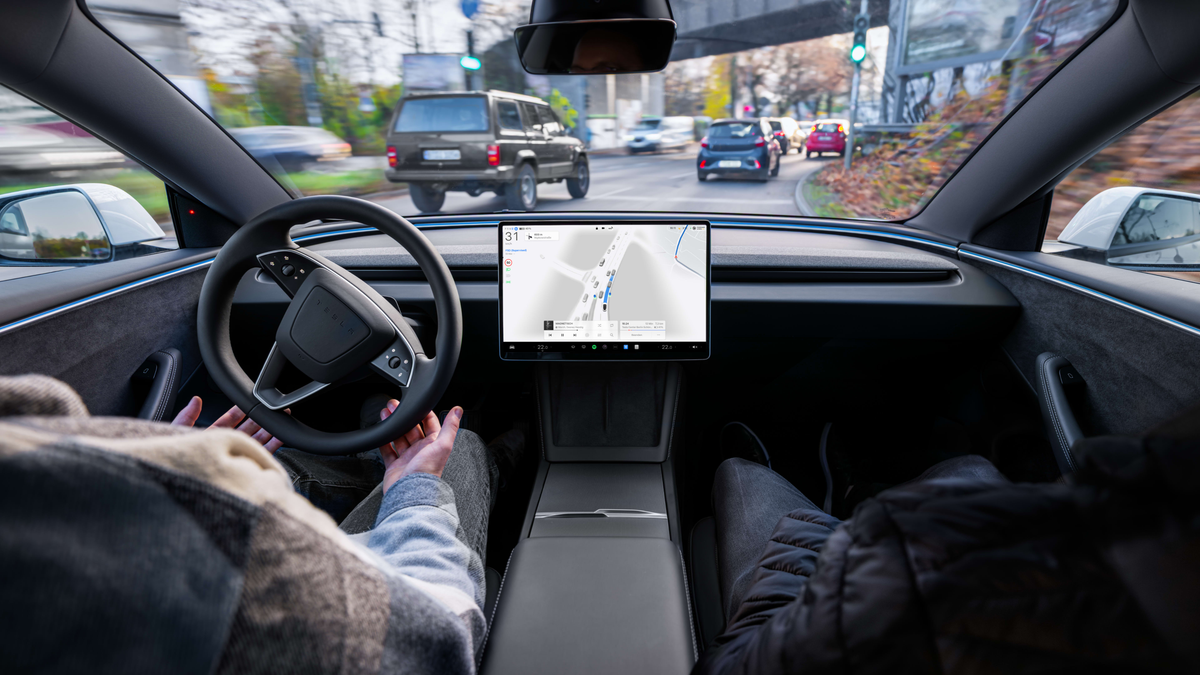
Germany now publicly backs a timely EU-wide approval path for Tesla Assisted Driving, the name Tesla has offered for FSD (Supervised) in Europe. The German transport ministry says it reached understandings with Tesla on naming, a maximum 10% speed offset and continued driver responsibility. The Dutch RDW has approved a new Tesla Assisted Driving update for HW4-or-newer vehicles: earlier attention warnings, a full strike for inattention during a manoeuvre, clearer Contextual Max Speed prompts and hands-on-wheel monitoring above 130 km/h. Tesla controls OTA timing, and EU-wide approval is still pending.
30-Second Brief
- Germany’s Federal Ministry of Transport published its position on October 6, 2026, supporting timely EU-wide approval of Tesla’s supervised assistance system.
- The ministry says Tesla offered the name “Tesla Assisted Driving” because “Full Self-Driving” could imply that the system takes over the complete driving task.
- Germany says its September talks with Tesla produced an understanding that the system may exceed the posted speed limit by no more than ten percent under the proposed approach.
- The ministry states that the driver remains fully responsible for safe operation and must stay attentive.
- No German approval, EU decision, customer launch date, price or complete vehicle-eligibility list was announced in the original October 6 statement.
- November 3 update: the Dutch RDW approved Tesla's TAD name, a maximum +10% speed offset and default-off speed settings within the existing approval for TAD-equipped HW4-or-newer vehicles. The EU-wide TCMV process remains pending.
- November 10 Finland update: Traficom recognised the provisional Dutch approval nationally, allowing Tesla Assisted Driving on Finnish roads and allowing Tesla to begin offering it to Finnish customers immediately.
- Traficom says drivers remain responsible for speed and safe operation, and warns that snow, slush and sleet can limit camera-based operation.
- November 16 RDW update: RDW approved earlier attention warnings, a full strike for inattention during a manoeuvre, new speed-setting prompts and a hands-on-wheel requirement above 130 km/h for TAD-equipped HW4-or-newer vehicles.
- RDW says Tesla decides when to deliver the OTA update; the notice does not establish that every eligible vehicle has already received it.
- November 19 Italy update: Italy recognised the Dutch provisional approval nationally; the ministry announced the decision on November 20.
- The Italian notice preserves driver responsibility, hands-on-wheel supervision and an April 10, 2029 temporary-validity boundary.
What Happened
Italy’s Ministry of Infrastructure and Transport says the national motor-vehicle authority recognised the Netherlands’ provisional approval for Tesla Assisted Driving on November 19. The ministry says drivers remain responsible, must keep their hands on the wheel and must be able to intervene. The authorisation remains temporary through April 10, 2029; it is not EU-wide approval or unsupervised driving.
The Dutch RDW says it tested Tesla’s latest Tesla Assisted Driving changes on a test track and public roads. The approved update adds earlier attention warnings, a full strike during a manoeuvre when the driver is inattentive, clearer Contextual Max Speed feedback and a hands-on-wheel requirement above 130 km/h. RDW found no adverse or unintended effects in its tests, but Tesla still controls the OTA release timing.
Finland’s Transport and Communications Agency says it has recognised the Dutch provisional type approval for Tesla Assisted Driving. The system may now be used as driver assistance on Finnish roads, and Tesla may begin offering it to customers in Finland. Traficom stresses that the driver remains responsible, winter conditions can limit camera visibility, and Finland’s national decision does not bind its vote in the pending EU-wide process.
Germany’s transport ministry moved from describing an ongoing approval process to publicly supporting a timely EU-wide path for Tesla’s supervised driver-assistance system. Minister Steffen Bilger said the ministry discussed technical and liability questions with Tesla in September and reached what it called a constructive agreement.
The statement identifies three practical boundaries. First, Tesla offered the less expansive name “Tesla Assisted Driving.” Second, Germany says the speed-setting approach would cap any permitted offset at ten percent above the posted limit. Third, the ministry says the person driving remains fully responsible. Those terms are Germany’s stated basis for supporting continued European review; they do not by themselves authorize use in Germany.
The Netherlands Vehicle Authority says it approved the Tesla Assisted Driving name and the revised speed settings within the existing type approval. The maximum driver-selected speed offset falls from +50% to +10%, resets to 0% at startup and leaves other speed-related functions off by default. RDW says the update applies to TAD-equipped vehicles with Hardware 4.0 or newer, will be delivered by Tesla over the air, and does not change the system's supervised-driver responsibility.

What Is Confirmed
- Official German position: the federal transport ministry supports advancing the European approval process and wants the system available across the EU as soon as the process permits.
- Name proposal: Tesla offered “Tesla Assisted Driving” because the ministry considers the existing FSD name potentially misleading for a supervised assistance system.
- Speed approach: the ministry says Germany and Tesla agreed on a maximum ten-percent offset above the posted limit within their proposed framework.
- Driver responsibility: the ministry says the driver remains fully responsible and the system does not take over the complete driving task.
- Independent confirmation: dpa-AFX separately reported Bilger’s support for EU-level agreement and the unresolved technical and liability questions.
- RDW approval: the Dutch authority approved the TAD name and revised speed settings within the existing type approval after finding no adverse or unintended driving effects.
- Vehicle scope: RDW says the update applies to Tesla models equipped with TAD and Hardware 4.0 or newer.
- Delivery: Tesla will implement the software changes over the air; the regulator did not publish a universal customer rollout date.
- Mutual-recognition countries: RDW says Belgium, Denmark, Estonia, Croatia, Latvia, Lithuania, Slovenia, Slovakia and Czechia were informed of the changes.
- Independent reporting: Not a Tesla App separately documented the RDW notice and preserved the distinction between current approvals and the pending EU-wide process.
- Finland recognition: Traficom recognised the provisional Dutch approval on November 10, making the system permitted as driver assistance on Finnish roads.
- Immediate national availability: Traficom says Tesla can begin offering the system to customers in Finland immediately, subject to Tesla’s vehicle-level eligibility and software delivery.
- Driver responsibility: the Finnish authority says the driver remains responsible for speed and safe driving and must account for inaccurate system operation.
- Winter boundary: Traficom specifically warns that snow, slush and sleet can obstruct cameras and limit functionality.
- Independent confirmation: Reuters separately reported the national approval and the changes to name and speed settings.
- New monitoring approval: RDW approved earlier warnings and a full strike when the driver is inattentive while TAD performs a manoeuvre.
- High-speed supervision: the driver must keep hands on the steering wheel above 130 km/h.
- Speed transparency: Contextual Max Speed now uses pulsing indicators and requires a scroll-wheel confirmation before a higher maximum is set.
- Regulator testing: RDW says it tested the changes on a test track and public roads and observed no adverse or unintended effects.
- Independent update check: Not a Tesla App separately documented the same RDW-approved changes and preserved the Tesla-controlled rollout boundary.
- Italy recognition: the Italian transport ministry says the national authority recognised the Dutch provisional TAD approval on November 19.
- Supervision: Italy says the driver remains responsible, must keep hands on the wheel and must be ready to intervene.
- Temporary validity: the ministry states that the provisional authorisation is valid through April 10, 2029.
- Independent confirmation: Reuters separately reported Italy’s national green light and the continuing EU-level process.
What Remains Unconfirmed
RDW's notice does not announce a completed EU-wide decision, a TCMV vote result, a universal effective date, consumer pricing or a complete VIN-level eligibility list. It establishes HW4-or-newer scope for TAD-equipped vehicles under the approval it reviewed, not every Tesla in Europe. Traficom’s notice does not publish a complete VIN list, Finnish price, subscription terms, rollout completion date or a promise that every qualifying car receives the update at once. RDW’s November 16 notice also does not identify the Tesla software build, rollout start, completion percentage or a vehicle-by-vehicle delivery schedule. Tesla’s German page continues to invite people to register for information about regional test-drive availability rather than presenting the feature as broadly available to customers.
The European Transport Safety Council previously challenged Tesla’s speed-offset behavior under European and UN rules. Germany’s proposed ten-percent cap is a response within the ongoing debate, not proof that every regulator or member state has accepted the approach.
Why It Matters
Germany is one of Europe’s most influential vehicle markets and approval authorities. Its public support could help move a cross-border process that has otherwise advanced through country-specific recognition. The new wording also narrows the product promise: “Assisted Driving” makes the supervised, driver-responsible boundary harder to miss.
For owners in countries using the Dutch approval, the accepted behaviour is now clearer: attention warnings can arrive earlier, inattention during a manoeuvre can trigger a full strike, and speeds above 130 km/h require hands on the wheel. These are supervision rules, not a new autonomy level. Finland’s national recognition remains in place, while other countries and the EU-wide process retain separate approval gates.
What Tesla Owners Should Know
- Do not treat the statement as approval. Germany supports the process, but the ministry did not authorize a customer rollout.
- Watch official Tesla and regulator pages. Wait for an in-app offer, release note or formal authority notice tied to your country and vehicle.
- Expect supervised use. The driver remains responsible for speed, route decisions and intervention even if the system is approved.
- Check cross-border availability. Feature availability can differ between European countries and may change when crossing a border.
- Separate branding from capability. A new name clarifies the product boundary but does not establish new technical performance or eligibility.
- Check hardware and country scope. RDW identifies TAD-equipped HW4-or-newer vehicles and nine countries using the Dutch approval; wait for the matched in-car OTA and local Tesla notice.
- Recheck speed settings after startup. RDW says the offset defaults to 0% and other speed-related functions default off whenever the car starts.
- Finnish owners should verify vehicle eligibility. Regulatory recognition does not replace the in-car offer, matched hardware and software update.
- Preserve the supervision boundary. Traficom says the driver remains responsible for speed, safe operation and intervention, especially when winter weather obscures cameras.
- Expect stricter attention enforcement. A full strike can apply during a manoeuvre when the driver is inattentive.
- Keep hands on the wheel above 130 km/h. RDW identifies this as a requirement in the approved update.
- Do not assume immediate delivery. Check the in-car release notes and active behaviour because Tesla controls the OTA timing.
- Italian owners should wait for vehicle-level delivery. National recognition does not prove that every Tesla, account or software build is eligible today.
- Keep the driver-responsibility boundary. Italy’s notice requires hands-on-wheel supervision and readiness to intervene.
Tesstudio Analysis
Tesstudio scores this fallback Verified Brief at 81.45. The evidence is unusually direct for a regulatory-policy update: an official German ministry statement, independent dpa-AFX confirmation, a published safety-policy objection from ETSC and current Tesla Germany product and safety pages.
The regulatory picture has advanced from policy support to an approved modification within an existing Dutch type approval. That is a material update, but not the same as a completed EU-wide authorization. The most accurate owner takeaway is now both country- and build-specific: Finland has crossed its national recognition gate, while RDW has approved another HW4-or-newer behaviour update. The new safeguards clarify how supervised use should work, but they do not settle EU-wide approval, HW3 treatment, the exact software build or one universal rollout schedule.
Italy is now another national-recognition market inside the same provisional European framework. The decision is material availability progress, but the narrow reading remains essential: supervised use, temporary authorisation, country-specific recognition and Tesla-controlled vehicle delivery.
Sources & Reporting Notes
- German Federal Ministry of Transport: Current status of Tesla assistance-system approval — primary government statement, October 6, 2026.
- dpa-AFX via ARIVA: Bilger supports Tesla assistance-system approval — independent same-day reporting on the minister’s position.
- European Transport Safety Council: Tesla FSD speed-offset briefing — independent safety-policy context published before the October discussions.
- Tesla Germany: Full Self-Driving (Supervised) — current company product and regional-interest page.
- Tesla Germany: FSD (Supervised) Vehicle Safety Report — company methodology and source visual; company-reported claims are labeled.
Reporting note: RDW is the controlling source for the November 16 monitoring and speed-behaviour approval. Not a Tesla App independently confirms the change and rollout boundary. Traficom, the earlier RDW notice and Germany’s ministry provide national and EU-process context. No source establishes EU-wide approval or completed fleet delivery. Community posts were discovery-only.
Reporting note: Italy’s ministry is the controlling source for the national recognition and supervision boundary. Reuters supplies independent confirmation; RDW supplies the underlying provisional-approval and rollout context. No source establishes EU-wide approval, unsupervised driving or completed fleet delivery.
Update & Correction Log
October 7, 2026: Initial publication. The article distinguishes Germany’s support for the approval process from actual German or EU authorization and preserves the supervised-driver responsibility boundary.
November 3, 2026: Added RDW's approval of the TAD name and revised speed settings, the HW4-or-newer scope, OTA implementation, notified countries and the still-pending EU-wide TCMV boundary.
November 11, 2026: Added Finland’s recognition of the Dutch provisional approval, the immediate national-use and customer-offering status, the continuing EU-wide vote boundary, driver responsibility and winter camera limitations.
November 17, 2026: Added RDW’s approval of stricter attention warnings, the full-strike rule during manoeuvres, Contextual Max Speed prompts and the hands-on-wheel requirement above 130 km/h. Preserved the HW4+, Tesla-controlled OTA and pending EU-wide approval boundaries.
November 20, 2026: Added Italy’s November 19 recognition of the Dutch provisional approval, the hands-on-wheel and driver-responsibility boundaries, and the April 10, 2029 temporary-validity date.


Laisser un commentaire
Ce site est protégé par hCaptcha, et la Politique de confidentialité et les Conditions de service de hCaptcha s’appliquent.