
Verified Brief: SpaceX Selects Qualcomm for Starlink Mobile’s U.S. 5G Network
Verified Brief · Company Release + Independent Corroboration

SpaceX selected Qualcomm Dragonwing radio and baseband platforms for the planned Starlink Mobile U.S. 5G network. Qualcomm says a multiyear deployment will start in 2027 and cover tens of thousands of sites. This is a supplier and architecture milestone—not a live nationwide retail service, coverage guarantee or Tesla connectivity announcement.
30-Second Brief
- Qualcomm announced on November 4 that SpaceX selected Dragonwing QRU100 and QDU100 platforms plus commercial Layer 1 software for Starlink Mobile’s U.S. terrestrial base stations.
- The companies describe a multiyear agreement, with deployment planned to begin in 2027 and tens of thousands of sites expected over the agreement.
- The design uses 64-transmit/64-receive Massive MIMO radio units, with Qualcomm supplying foundational radio and baseband processing.
- SpaceX is responsible for higher software layers, system integration and deployment beyond Qualcomm’s supplied components.
- No nationwide consumer launch date, service price, compatible-device list or measured coverage result was announced.
What Happened
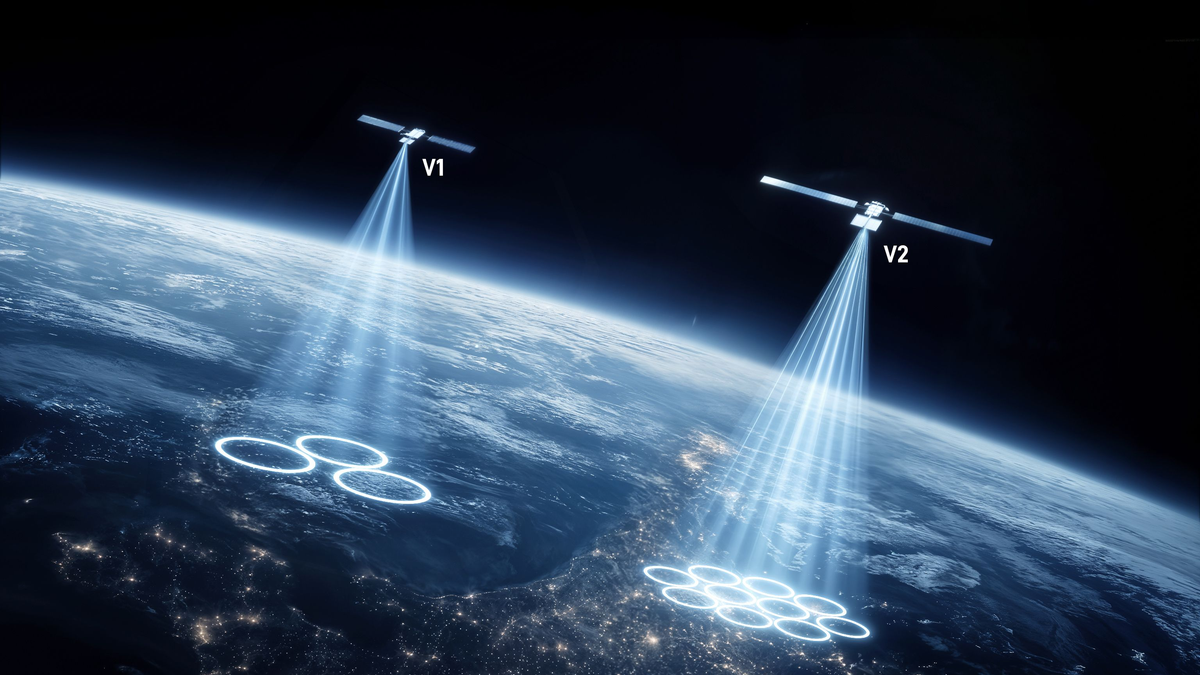
Qualcomm Technologies said SpaceX chose its Dragonwing Cellular Infrastructure platforms to support a nationwide terrestrial 5G layer for Starlink Mobile in the United States. The release names QRU100 radio-unit processing, QDU100 distributed-unit processing and commercial Layer 1 software as the foundational components.
Starlink senior vice president Michael Nicolls said the terrestrial system is intended to work with SpaceX’s satellite network. Axios independently reported that the agreement covers tens of thousands of traditional cellular sites, while Converge Digest documented the named platforms, 64T64R architecture and rollout timing.
What Is Confirmed
- Supplier selection: Qualcomm says SpaceX selected its Dragonwing Cellular Infrastructure platforms for Starlink Mobile’s U.S. terrestrial network.
- Named platforms: the agreement identifies QRU100 and QDU100 plus Qualcomm commercial-grade Layer 1 software.
- Radio architecture: Qualcomm describes 64T64R Massive MIMO radio units designed to improve capacity and spectral efficiency.
- Scale: the company release and independent reporting say tens of thousands of sites are planned under a multiyear agreement.
- Timing: deployment is planned to begin in 2027. That is a forward plan, not proof that a nationwide network is operating today.
- Division of work: Qualcomm supplies foundational radio and baseband technology; SpaceX must build higher software layers, system elements and the deployed network.
What Remains Unconfirmed
The announcement does not disclose financial terms, exact site count, tower partners, a market-by-market schedule, final spectrum approvals for every deployment, retail pricing, device eligibility or a consumer launch date. “Nationwide” describes the intended U.S. network footprint, not a current measured coverage map.
Qualcomm and SpaceX also discuss a path toward AI-native 6G. That is a technology direction, not a delivered 6G service. Claims about future coverage, capacity, indoor performance or competitive impact should be tested against deployment records and customer terms when they become available.
Why It Matters
The agreement converts part of SpaceX’s mobile-network strategy from a general architecture into a named supplier relationship with defined radio and baseband components. A terrestrial layer could add capacity and indoor or obstructed-location coverage that direct satellite links alone may not provide.
Execution remains the hard part. SpaceX must secure sites, permits, backhaul, equipment integration and operating approvals while building consumer billing and support systems. Qualcomm’s selection is evidence of commitment and technical planning, but it does not erase those deployment requirements.
What Tesla Owners Should Know
This is a SpaceX and Starlink Mobile infrastructure agreement. It does not add satellite or terrestrial connectivity to a Tesla vehicle and does not change Tesla Premium Connectivity.
- No action is required. There is no new Tesla vehicle setting or subscription associated with this announcement.
- Do not treat 2027 as a nationwide launch promise. It is the stated start of deployment.
- Wait for device terms. Network hardware does not establish which phones, plans or locations will qualify.
- Separate satellites from ground sites. The Qualcomm agreement focuses on the terrestrial 5G layer that is intended to complement Starlink satellites.
- Track hard milestones. Site construction, regulatory approvals, published coverage and retail terms will show whether the plan becomes usable service.
Tesstudio Analysis
Tesstudio scores this event 84.6. Authority is strong because Qualcomm distributed a detailed company release quoting Starlink leadership, and Axios and Converge Digest independently corroborated the scale, timing and technical architecture. The score stays below the 88 scheduled tier because deployment is future-dated and commercial terms, operating approvals and consumer availability remain open.
The correct frame is a verified supplier and architecture milestone. Calling Starlink Mobile an operating fourth nationwide carrier today would overstate the evidence; dismissing the announcement as only a concept would understate the named platforms, multiyear agreement and stated 2027 deployment start.
Sources & Reporting Notes
- Qualcomm Technologies via Business Wire/Yahoo Finance: SpaceX Selects Qualcomm — readable syndicated copy of the primary company release, November 4, 2026.
- Axios: SpaceX plans to build its own nationwide cell network — independent report on agreement scale, timing and implementation boundary.
- Converge Digest: SpaceX picks Qualcomm Dragonwing — independent technical report on QRU100, QDU100, Massive MIMO and Layer 1 scope.
- SpaceX: Building the World’s Most Advanced Mobile Network — October 8 primary context for the planned satellite-plus-terrestrial architecture and second source image.
Reporting note: Qualcomm and Starlink statements about future performance and deployment are attributed to the companies. Axios and Converge Digest provide independent corroboration but cannot prove future execution. Community discussion was used only to identify reader questions. No X API call was made because actual X billing could not be verified.
Update & Correction Log
November 4, 2026: Initial publication. The article distinguishes the supplier agreement and 2027 deployment start from a live nationwide retail network and from any Tesla vehicle-connectivity feature.


Leave a comment
This site is protected by hCaptcha and the hCaptcha Privacy Policy and Terms of Service apply.