
SpaceX Launches Globalstar 2-R and USSF-366 Missions About 38 Minutes Apart
Confirmed Launches · SpaceX Primary Mission Records
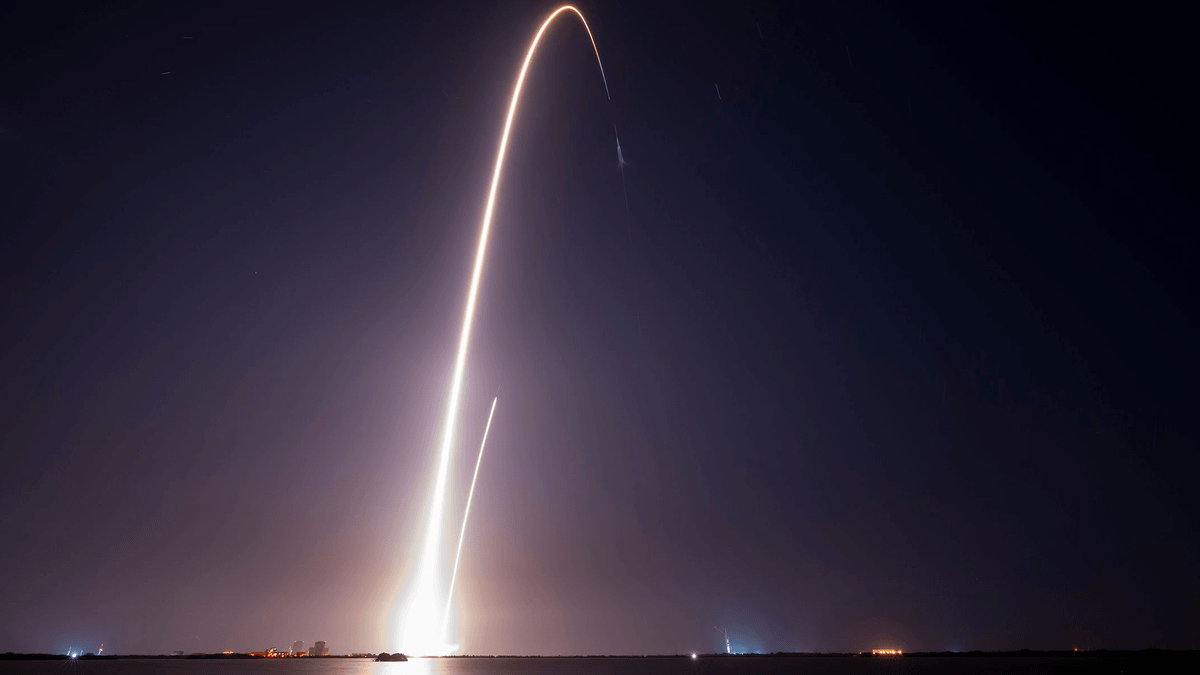
SpaceX double launch operations put Globalstar 2-R into flight from Florida and launched USSF-366 from California at company-listed times about 38 minutes apart. The paired missions are a notable Falcon 9 launch cadence demonstration, but SpaceX did not call the interval a company record on the cited pages.
30-Second Brief
- SpaceX says Globalstar 2-R Launch 1 lifted off from Cape Canaveral at 9:12 p.m. ET on August 15, or 01:12 UTC on August 16.
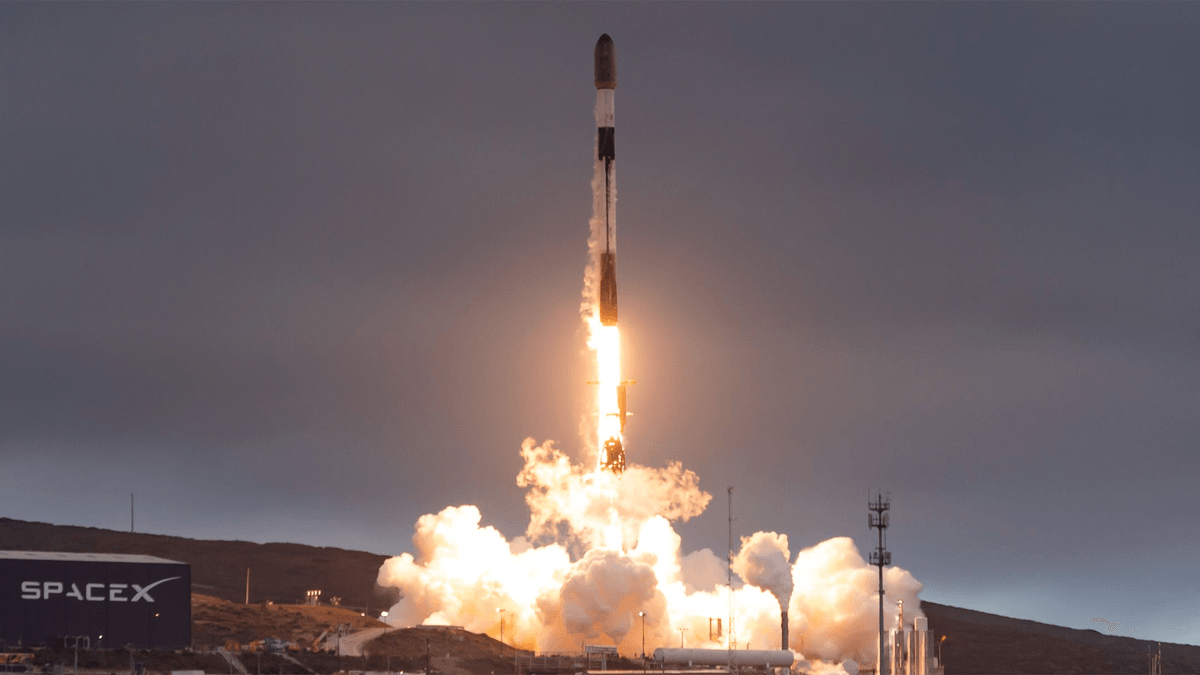
- SpaceX says USSF-366 lifted off from Vandenberg at 6:50 p.m. PT on August 15, or 01:50 UTC on August 16.
- The rounded gap between the company-published times is about 38 minutes.
- Both Falcon 9 first stages landed: the Globalstar booster at Landing Zone 40 and the USSF-366 booster on the Of Course I Still Love You droneship.
- SpaceX’s Globalstar timeline lists the deployment sequence ending at about T+1:02:42. The public USSF-366 page does not identify its payload.
What Happened
SpaceX conducted two Falcon 9 launches on opposite sides of the United States during the same 38-minute period. The first departed Space Launch Complex 40 in Florida with the Globalstar 2-R Launch 1 mission. The second departed Space Launch Complex 4E at Vandenberg Space Force Base in California with the USSF-366 mission.
The time comparison is straightforward: 9:12 p.m. Eastern is 01:12 UTC, while 6:50 p.m. Pacific is 01:50 UTC. Because SpaceX publishes only minute-level liftoff times in the mission-page summaries, “about 38 minutes” is the properly supported precision.
Official source video: watch the Globalstar 2-R webcast and watch the USSF-366 webcast.
What Is Confirmed
- Globalstar launch: SpaceX lists a 9:12 p.m. ET liftoff from SLC-40 in Florida.
- Globalstar booster: SpaceX says this was the first stage’s 14th flight and that it landed at Landing Zone 40.
- Globalstar deployment timeline: The mission page lists the deployment sequence beginning at T+56:29 and ending at T+1:02:42.
- USSF-366 launch: SpaceX lists a 6:50 p.m. PT liftoff from SLC-4E in California.
- USSF-366 booster: SpaceX says this was the first stage’s 18th flight and that it landed on the Of Course I Still Love You droneship.
- Calculated interval: Converting the company-published local times to UTC produces a rounded gap of about 38 minutes.
What Remains Unconfirmed
The cited SpaceX pages do not describe the launch interval as a company record, so this report treats it as a cadence calculation rather than an official record claim. Second-level precision is also not available in the mission summaries.
SpaceX’s public USSF-366 page does not identify the payload or describe classified mission objectives. It confirms the launch and booster landing, but readers should not infer payload type, orbit, deployment status or mission purpose from speculation. Globalstar’s earlier release describes the HIBLEO-4 spacecraft as replenishment satellites, but a current independent commissioning report for each spacecraft was not present in the sources reviewed.
Why It Matters
Launching from two coasts within the same hour tests far more than rocket availability. Separate launch teams, range coordination, droneship and landing-zone operations, mission control functions and recovery assets must all operate without one mission disrupting the other.
For customers, that kind of parallelism can reduce schedule pressure when SpaceX is serving commercial, civil and national-security missions at the same time. It also shows why launch cadence should be evaluated as an operating-system question—not simply as a count of rockets leaving pads.
What Tesla Owners Should Know
- No Tesla vehicle feature changed. These were SpaceX launch operations, not a Tesla software or hardware announcement.
- The Globalstar mission is separate from Starlink. It carried replenishment spacecraft for Globalstar’s satellite network.
- USSF-366 details are limited. Treat payload descriptions not published by SpaceX or the U.S. Space Force as unconfirmed.
- The 38-minute figure is calculated. It comes from converting SpaceX’s minute-level local launch times to UTC.
- No buying action is needed. Tesstudio has not attached Related Gear because the event has no direct accessory or vehicle-compatibility connection.
Tesstudio Analysis
The news value is operational concentration: two Falcon 9 systems moving through launch and recovery flows nearly simultaneously on opposite coasts. The strongest evidence is also the simplest—SpaceX’s own mission summaries, timelines and newly published mission photography.
Our view is that the event is best framed as a cadence demonstration, not as a verified all-time record. A record label requires a consistent definition—company launches, orbital launches, liftoff times versus mission completion, and exact timestamps. The supported takeaway is that SpaceX launched two missions about 38 minutes apart and recovered both first stages.
Related Tesla News Resources
Follow the Tesstudio Tesla News hub for verified SpaceX, Starlink and Tesla developments. No product placement or purchase call-to-action is included because Tesstudio’s current vehicle-accessory catalog is not directly relevant to this launch event.
Sources & Reporting Notes
- SpaceX: Globalstar 2-R Launch 1 mission page — primary launch time, site, booster flight history, landing and deployment timeline.
- SpaceX: USSF-366 mission page — primary launch time, site, booster flight history and landing.
- Globalstar: HIBLEO-4 replenishment launch announcement — customer description of the satellites’ constellation-replenishment role.
Reporting note: The approximately 38-minute interval is Tesstudio’s conversion of SpaceX’s published local times. It is not presented as an official SpaceX record. Mission photographs are official SpaceX source images, resized and attributed rather than represented as Tesstudio-owned photography.
Update & Correction Log
August 16, 2026: Initial publication. The article distinguishes confirmed launch and landing facts from undisclosed USSF-366 details, and labels the 38-minute interval as a calculation rather than a company record claim.


Leave a comment
This site is protected by hCaptcha and the hCaptcha Privacy Policy and Terms of Service apply.