
Starlink Mini 12V/24V-to-30V DC Converter - Female Plug

Check the selected Tesla model, model year, and option before checkout. If this product has a Car Model or Compatible Model selector, choose the option that matches your vehicle.
- Use the product images and variant name to confirm the correct version.
- If you are unsure about fitment, contact Tesstudio with your Tesla model and production year before ordering.
Tesstudio installation support is available for Tesla owners who need help choosing, installing, or troubleshooting accessories.
Most Tesstudio accessories are designed for straightforward DIY installation. For powered upgrades, wiring, lighting, or large exterior parts, professional installation may be recommended.
Local installation and technical support
- Address: 14761 Franklin Ave # G, Tustin, CA 92780
- Technical support: +1 (657) 543-9876 or +1 (657) 565-1007
- Support hours: Monday-Friday, 8:30 AM-5:30 PM
The phone numbers above are for technical installation support only. For orders, shipping, returns, or general customer service, contact:
- Email: support@tesstudio.com
- WhatsApp: +1 714 317 9647
Tesstudio checks fit, material, and daily-use durability before listing products for Tesla owners.
- Eligible products include warranty support for non-human damage issues.
- If a product arrives damaged or does not fit as expected, keep the packaging and contact us with photos so we can help quickly.
In-stock items are usually processed within 1-2 business days. Delivery time depends on destination, product size, and stock status.
- Orders over $99 qualify for free standard shipping where available.
- Oversized, remote-area, pre-order, and special-market items follow the terms shown on the product page.
- Tracking is provided after dispatch.
Need help before or after purchase?
Contact Tesstudio support:
WhatsApp
+1 714 317 9647
حدِّد الخيارات
Turn 12V or 24V Battery Power Into a Stable 30V Supply for Starlink Mini
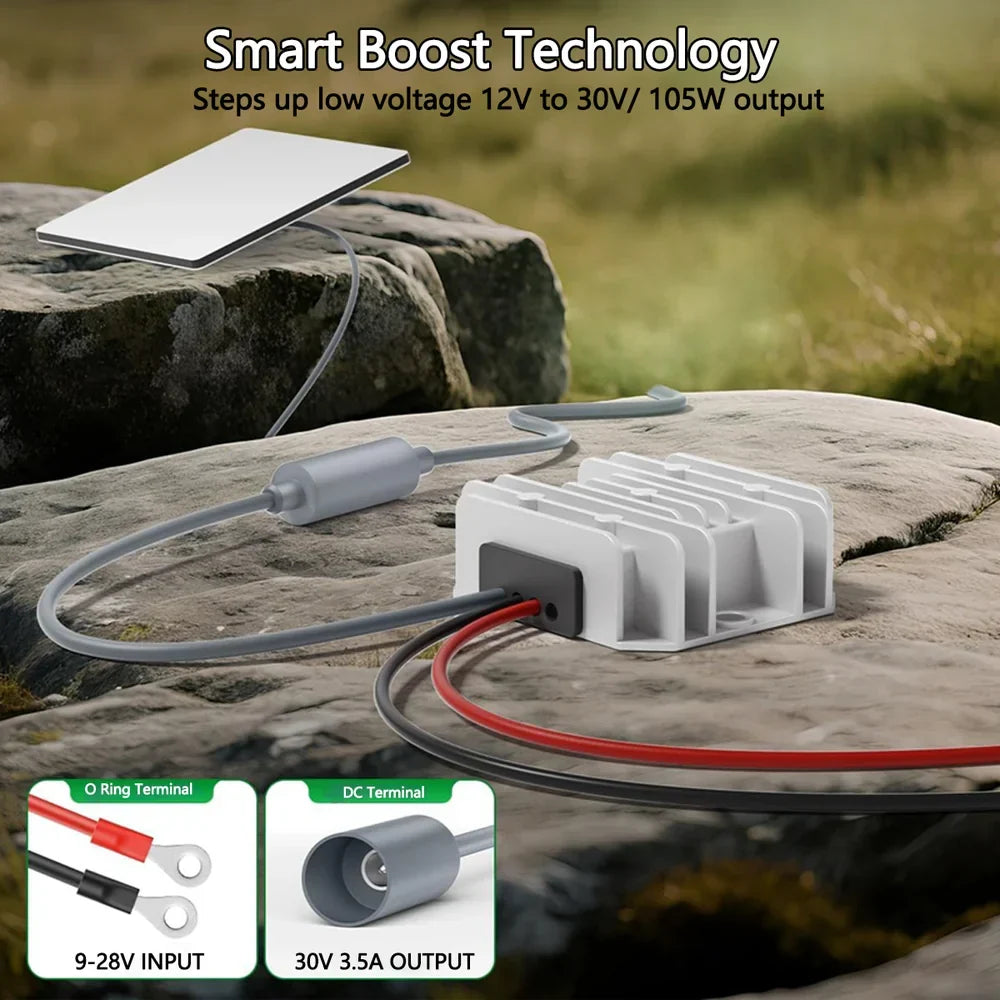
A compact DC boost converter designed for compatible vehicle, RV, battery and off-grid Starlink Mini installations. Accept low-voltage DC power and convert it to a regulated 30V output without relying on a separate AC inverter.

Give Starlink Mini a Higher-Voltage DC Supply Without Adding an AC Inverter
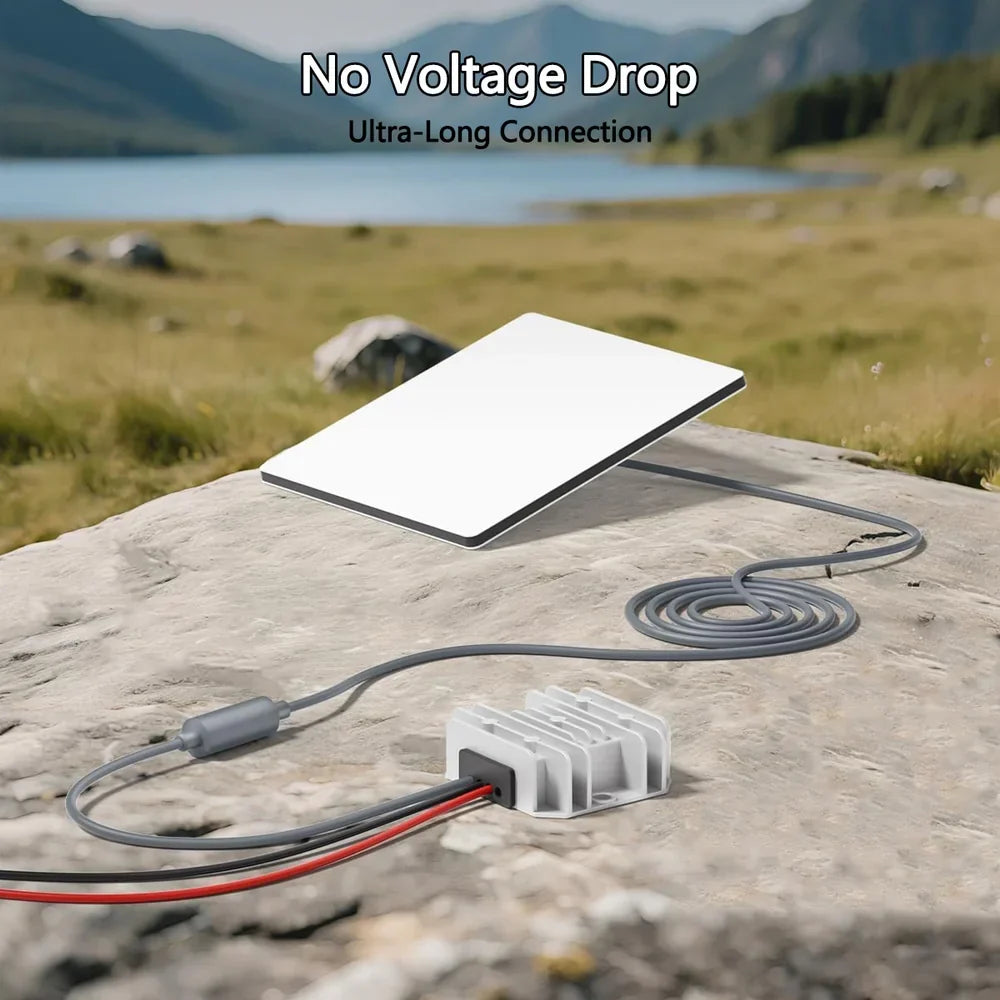
Long 12V Cable Runs Can Be More Sensitive to Voltage Drop
Battery voltage, cable resistance and installation distance can reduce the voltage that finally reaches Starlink Mini, especially in lower-voltage mobile power systems.
Convert the Battery Side to a Regulated 30V Output
The converter accepts compatible 9–28V DC input and provides a listed 30V / 3.5A output, creating a dedicated higher-voltage power path for Starlink Mini.
One Converter Between the Battery and Starlink Mini
Wide DC Input
Listed 9–28V input supports compatible 12V and 24V battery-based power systems.
Regulated 30V Output
Converts the compatible input supply to a dedicated 30V DC output for Starlink Mini.
Ring-Terminal Input
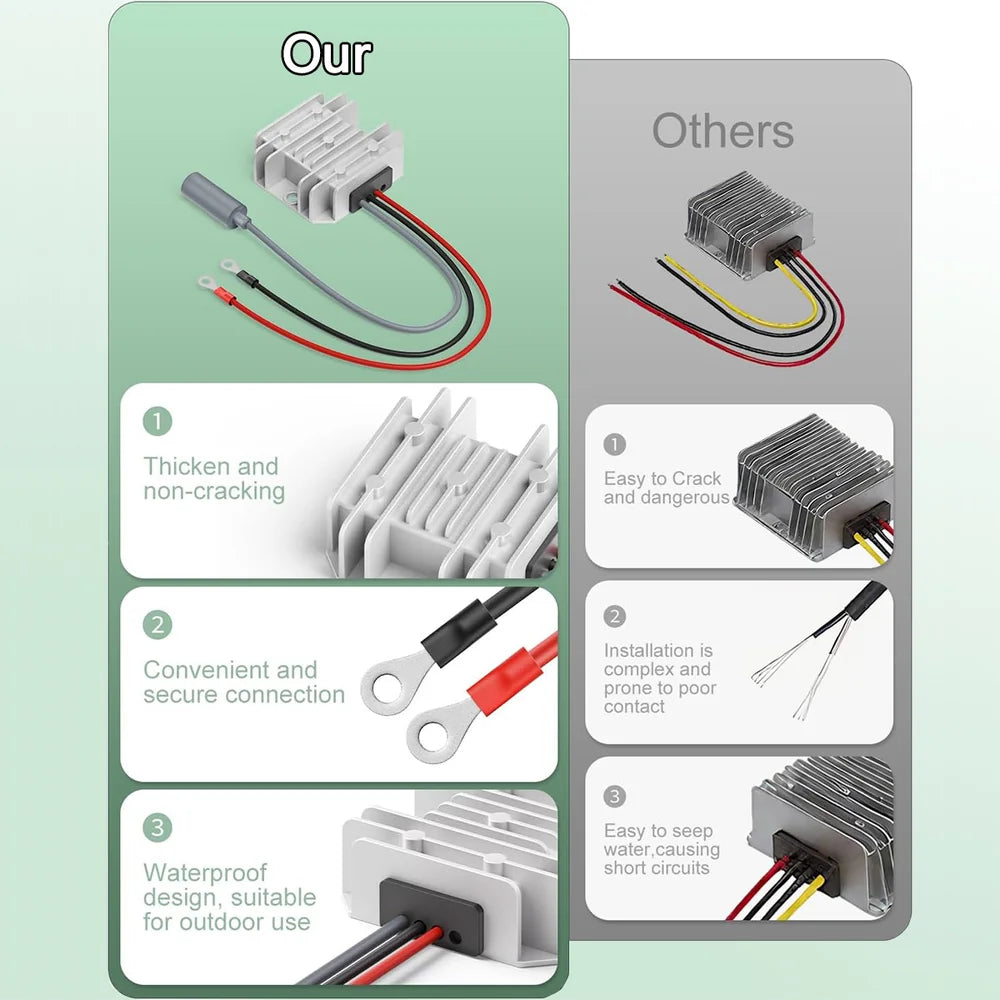
Red and black ring leads create a secure connection to compatible battery or DC distribution studs.
Compact Heat-Sink Body
Finned metal housing helps spread heat while keeping the converter compact.
Step Compatible Battery Voltage Up to 30V DC
The converter is designed to accept a lower-voltage DC source and provide a 30V output for a compatible Starlink Mini power setup.
- 9–28V DC input range shown in current product media
- 30V / 3.5A listed output
- 105W maximum converter capacity shown
- Starlink Mini typically uses substantially less than 105W
30V Output Designed Around Mobile Starlink Mini Power
The converter's maximum output capability is not the same as Starlink Mini's normal power consumption.
30V Sits Inside Starlink Mini's Published DC Input Range
Starlink currently specifies Mini for 12–48V DC input with a 60W maximum input rating.
Starlink lists average Mini consumption around 25–40W during normal operation.
The converter's listed 105W capacity provides electrical headroom; it does not force 105W into the Mini.
Starlink Mini draws the power it requires from an appropriate voltage source. The converter's 30V / 3.5A rating describes its listed maximum output capability, not continuous Mini consumption.
Designed for Vehicle, RV and Off-Grid Power Environments
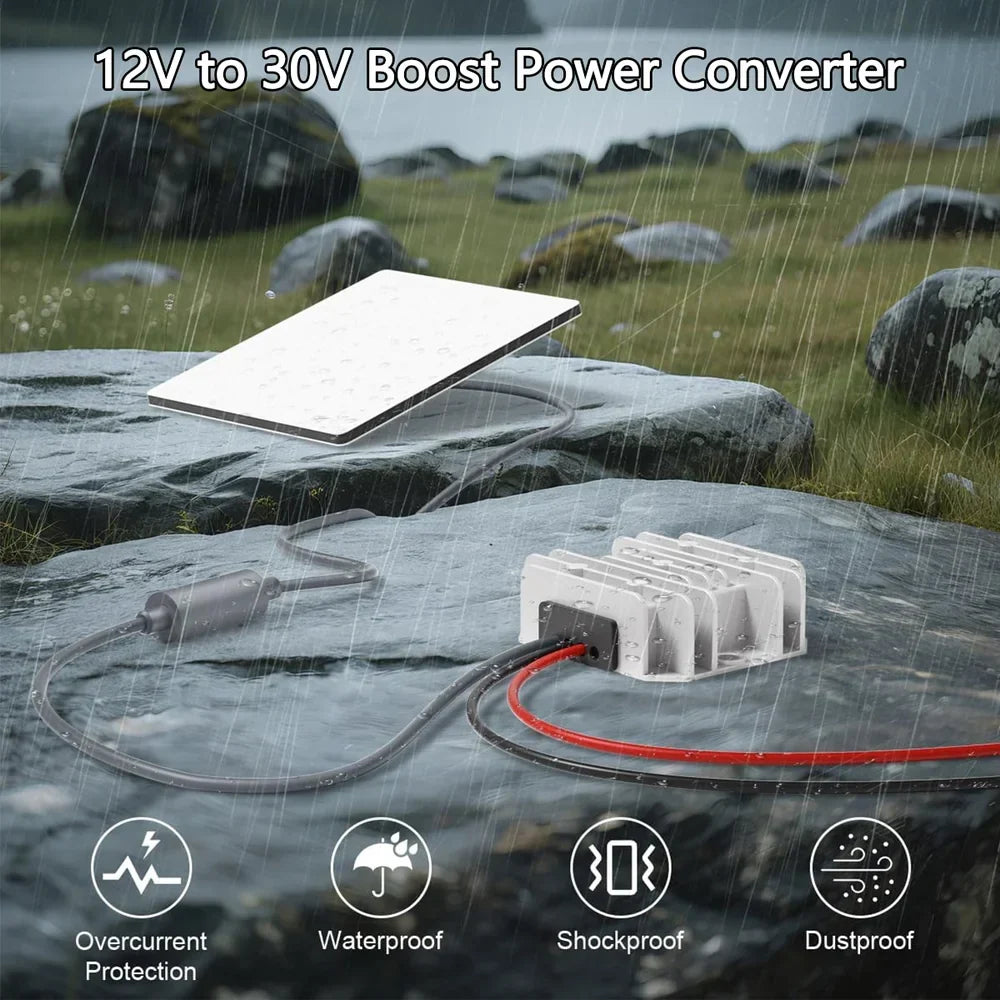
Current product imagery identifies built-in over-current protection as part of the converter design.
The sealed converter body is promoted for outdoor-oriented electrical installations.
The solid converter enclosure is intended for mobile environments where vibration can occur.
Sealed wire exits reduce direct exposure of internal electronics to dust and debris.
Weather-resistant converter construction does not make battery terminals, ring connectors or every attached electrical connection waterproof.
Small Enough to Integrate Into an RV or Battery Compartment
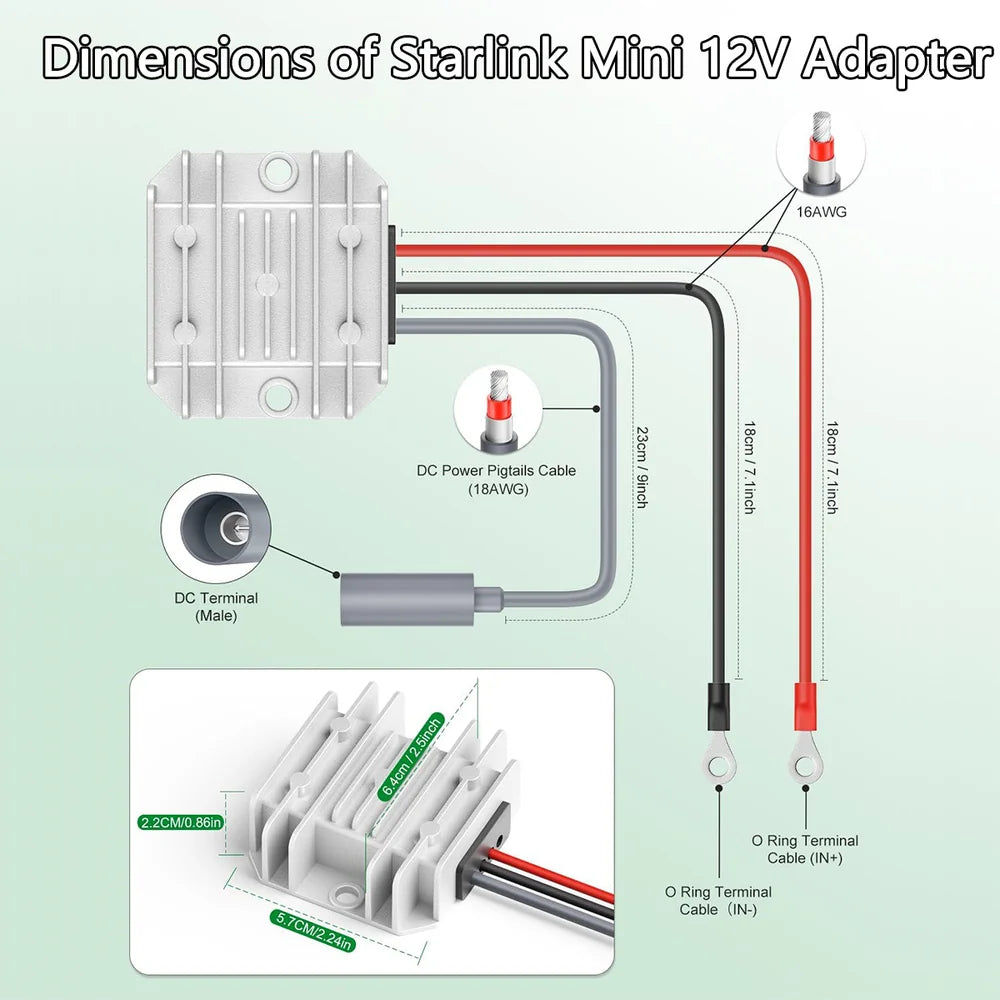
Approx. 5.7cm / 2.24in according to current product media.
Approx. 6.4cm / 2.5in according to the current dimension graphic.
Approx. 2.2cm / 0.86in excluding the wiring.
Integrated mounting ears allow the converter body to be mechanically secured.
Ring Terminals Make Battery-Side Installation More Secure
Current product imagery shows dedicated red and black ring-terminal input leads, helping create a fixed mechanical connection to a suitable battery or DC bus.
- 16AWG input leads shown in current product media
- Red positive and black negative wiring
- Approx. 18cm / 7.1in input lead length shown
- Use appropriate fuse protection close to the battery source
Connect the Regulated Output to the Compatible Starlink Mini Power Path
The converter includes an integrated DC output lead so the regulated 30V supply can connect to the corresponding Starlink Mini power cable or compatible connection.
- 30V / 3.5A listed converter output
- 18AWG output pigtail shown in current dimensions
- Approx. 23cm / 9in output lead shown
- Compare the supplied connector with your Mini setup before installation
Build Starlink Mini Around the DC Power System You Already Have
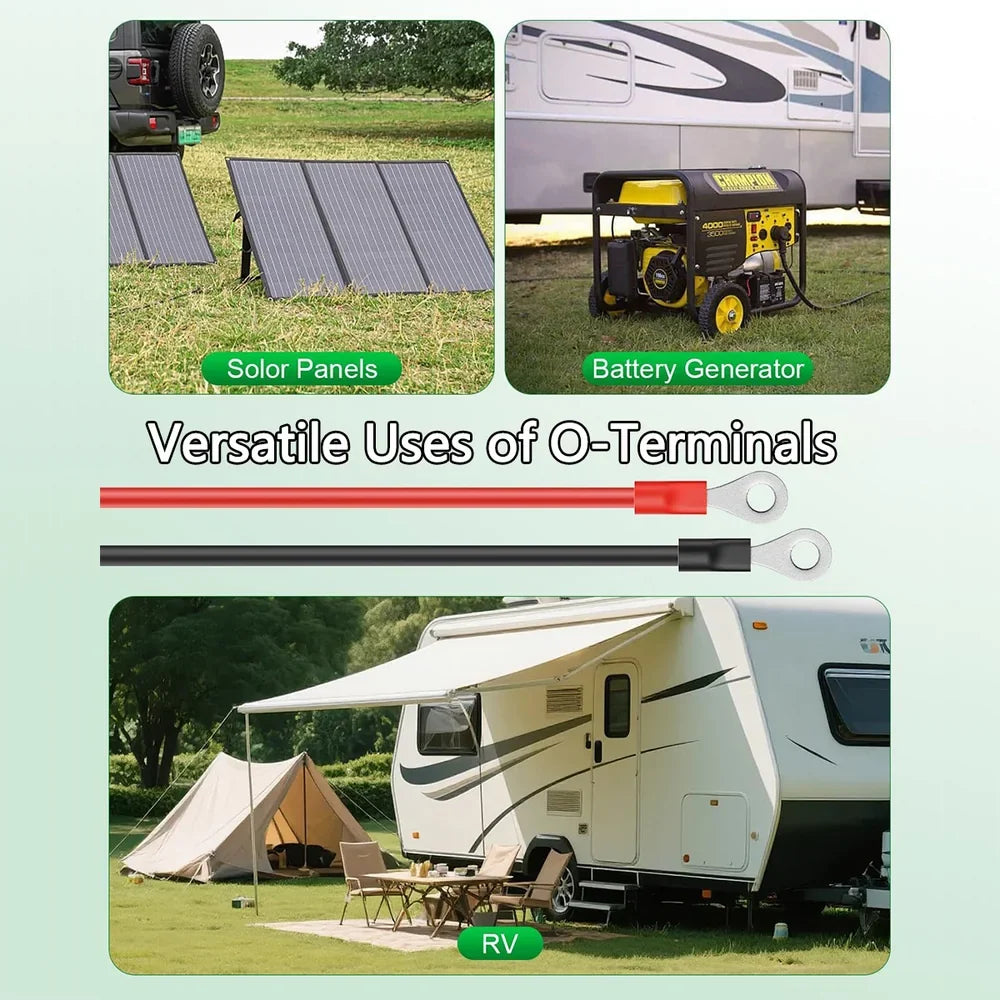
Convert compatible low-voltage house-battery power to a regulated 30V Mini supply.
Useful for dedicated secondary-battery systems in trucks, vans and mobile work vehicles.
Pair with a compatible battery bank charged by solar equipment for temporary off-grid use.
Can be integrated with an appropriate regulated DC supply that stays inside the listed input range.
Give Heat Somewhere to Go
The external fin structure increases the exposed housing surface area and helps the converter spread operating heat into the surrounding air.
- Finned metal enclosure
- Compact low-profile body
- Integrated mounting points
- Install where air can circulate around the housing
Fuse the Input. Confirm Polarity. Then Connect Starlink Mini.
A DC converter should be treated as part of the vehicle or battery electrical system rather than as a simple plug-in accessory.
Verify Input Voltage
Confirm the source stays within the converter's listed 9–28V DC input range.
Add Circuit Protection
Use suitable over-current protection close to the battery or DC source.
Connect Input Leads
Confirm positive and negative polarity before tightening the ring terminals.
Verify 30V Output
Check output voltage and connector fit before powering Starlink Mini for the first time.
Protect the Battery Circuit and Give the Converter Room to Dissipate Heat
A battery can deliver substantial fault current. Correct wiring and circuit protection matter as much as the converter itself.
Install appropriately sized protection on the positive input cable close to the battery.
Never assume terminal polarity from position alone. Verify positive and negative before energizing the converter.
Do not bury the heat-sink housing under insulation or place it directly beside high-temperature components.
Higher Distribution Voltage Can Reduce Current on the Starlink Side
For the same power level, a higher voltage generally requires less current. In suitable installations this can make a higher-voltage DC path useful where a direct low-voltage run would otherwise be more sensitive to cable resistance.
- Useful for compatible 12V battery systems
- Useful for compatible 24V battery systems
- Regulated 30V output stays within Mini's published input range
- Cable length and conductor size still matter
Build the Starlink Mini Power Setup Around How You Travel
Three complementary Tesstudio options for portable power, vehicle power and removable Starlink Mini mounting.
Starlink Mini DC Converter Questions
What does this converter do?
It converts a compatible lower-voltage DC source into a regulated 30V DC output intended for a compatible Starlink Mini power installation.
What input voltage does the converter accept?
Current product media lists the converter input range as 9–28V DC, making it suitable for many compatible 12V and 24V battery systems.
What is the output voltage?
The current product specification shows a regulated 30V DC output.
What is the maximum output current?
The current product imagery lists a maximum output of 3.5A at 30V.
Does 105W mean Starlink Mini will use 105 watts?
No. The 105W figure describes the converter's listed maximum output capacity. Starlink currently lists Mini average consumption around 25–40W and a 60W input rating.
Why use 30V if Starlink Mini can run from 12V?
Starlink Mini supports a broad DC input range, but lower-voltage systems can be more sensitive to voltage drop across long or undersized cable runs. A regulated 30V supply can be useful in a correctly designed installation.
Does Starlink Mini officially support 30V input?
Starlink currently publishes a Mini DC input range of 12–48V, so 30V sits inside that published range. Starlink only guarantees performance with its own supplied power equipment and cable.
Can I connect it to a 12V battery?
Yes, provided the actual source voltage remains inside the converter's listed input range and the battery, wiring and protection can supply the required power.
Can I use it with a 24V battery system?
A compatible 24V battery system falls inside the converter's listed 9–28V input range. Verify actual charging-system voltage before installation.
Can I connect it to a 36V or 48V battery?
No. The current converter input is listed as 9–28V DC. A 36V or 48V battery system can exceed that input rating even though Starlink Mini itself supports a wider voltage range.
Does the converter need a fuse?
Battery-side wiring should use correctly sized over-current protection close to the power source. Built-in converter protection should not be treated as a replacement for proper source-circuit protection.
What wire gauge is used?
Current product imagery identifies the red and black input leads as 16AWG and the DC output pigtail as 18AWG.
How large is the converter?
Current product media shows the converter body at approximately 5.7 × 6.4 × 2.2cm (2.24 × 2.5 × 0.86in), excluding attached wiring.
Is the converter waterproof?
Current product imagery promotes water-resistant, dust-resistant and shock-resistant construction. No specific IP rating is stated in the current imagery, so do not treat exposed terminals or the complete installation as submersible or fully waterproof.
Can I mount the converter outside an RV?
Use a location appropriate for electrical equipment and protect exposed battery terminals and connections from standing water, corrosion and direct mechanical damage.
Does it have over-current protection?
Current product imagery lists over-current protection as one of the converter's protection features. A correctly sized source fuse is still recommended.
Is the DC connector male or female?
Connector naming can vary between barrel-jack conventions. Compare the connector shown in the product photos with your existing Starlink Mini power cable or adapter before ordering.
Can I use it with a solar battery bank?
Yes, when the battery-side output remains within the converter's listed 9–28V input range and the system can supply the required continuous power. The converter connects to the battery system, not directly to an unregulated solar panel.
Can I connect it directly to a solar panel?
A solar panel's voltage can vary substantially with sunlight, temperature and load. A suitable battery, solar controller or regulated DC source should normally be used rather than assuming a raw panel output is appropriate.
Where should the converter be mounted?
Mount it securely where the finned housing has airflow, the wiring is protected from chafing, and the converter is away from excessive heat, moving parts and direct impact.
Why is the converter housing finned?
The fins increase the external surface area of the enclosure to help spread and dissipate heat generated during DC voltage conversion.
What should I do if the converter becomes unusually hot?
Disconnect the load and power source and inspect the installation. Excessive heat can result from poor ventilation, loose electrical connections, excessive load or an unsuitable source.
Is Starlink Mini or the battery included?
No. Starlink Mini, batteries, solar panels, generators, vehicles and other equipment shown in the product imagery are for demonstration only. This listing is for the DC boost converter and attached wiring shown.
Is this an official Starlink product?
No. This is an aftermarket power accessory for compatible Starlink Mini installations and is not manufactured or endorsed by Starlink.
Q&A
We provide assistance through email, live chat, and detailed installation guides. Additionally, we offer step-by-step tutorial videos featuring influencers to help you with the process.
We offer a one-year warranty (two years for some products).
Yes, the product can be removed after installation without affecting the original wiring harness of the vehicle.
We offer free returns and exchanges if there are any quality issues with the product upon receipt by the customer.

Subscribe
Join Us - Enjoy our latest news and exclusive discounts & gifts.