
Owner Brief: How to Store a Tesla Model Y for Weeks Without Draining the Battery
Owner Brief · Current Tesla Model Y Manual

For Tesla Model Y long-term storage, Tesla says to leave the battery at around 50% charge and keep the car plugged in when possible. Avoid letting the battery reach 0%, reduce parked loads such as Sentry Mode and climate features, and remember that checking the app wakes the vehicle.
30-Second Brief
- This Owner Brief is dated November 11, 2026 in America/Los_Angeles and summarizes current standing Tesla guidance; it is not a new product announcement.
- Tesla says the most important step when a Model Y will sit for weeks is to leave it plugged in.
- For long-term storage, Tesla says to keep the battery around 50% and plugged in when possible.
- If the vehicle must remain unplugged, Tesla says battery use can average approximately 1% per day, but the rate varies with weather, configuration and settings; that is not a guaranteed forecast.
- Avoid 0%. Tesla warns that full discharge can damage components and may require low-voltage battery service.
- Reduce parked energy loads and avoid repeatedly checking the app, which wakes the vehicle.
What Happened
As holiday travel and winter parking periods approach, owners are more likely to leave vehicles unused for days or weeks. Tesla’s current Model Y manual now gives a direct long-term-storage target: around 50% charge while plugged in, if possible.
This article is a current owner reference published through the mandatory fallback ladder after more than five no-publication hours and while the Los Angeles daily count remained below four. It does not claim Tesla changed the guidance today.
What Is Confirmed
- Plugged-in priority: Tesla says to leave the vehicle plugged in when it is not being used, especially for several weeks.
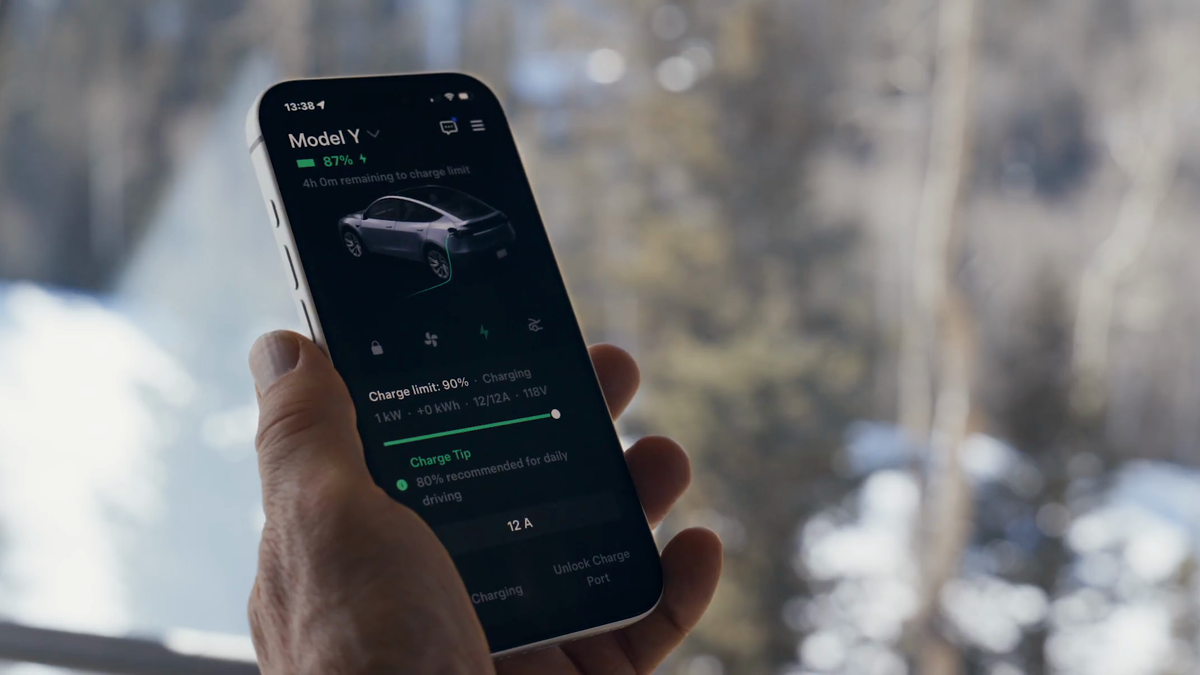
- Long-term target: Tesla says to store Model Y around 50% and use charge settings to maintain that level while plugged in.
- Unplugged drain: Tesla gives approximately 1% per day as a planning figure, while explicitly saying the rate varies.
- Zero-percent risk: Tesla warns that reaching 0% can damage vehicle components and create repair, transport or low-voltage battery consequences.
- Parked loads: Tesla identifies Sentry Mode, accessories, Powershare, Pet/Camp/Keep Climate On, Cabin Overheat Protection, unplugged preconditioning and Summon Standby as potential parked-energy users.
- App wakeups: Tesla says checking vehicle status in the app wakes the vehicle and starts normal energy consumption.
What Remains Unconfirmed
No fixed daily-drain number applies to every Model Y. Temperature, battery condition, mobile signal, software activity, vehicle configuration and enabled features can change consumption. The approximately 1% per day figure is a planning guide, not a guaranteed forecast.
This article also does not replace the manual shown in the owner’s own vehicle. Battery type, market, software and charge recommendations can differ. Owners should follow the charge limit displayed on their touchscreen and any vehicle alerts.
Why It Matters
The main risk is not a modest range drop—it is leaving too little buffer for an unplugged stay. A vehicle can continue using energy for electronics and the low-voltage system even when nobody drives it. Reaching 0% can turn a routine return from travel into a jump-start, tow or service visit.
Keeping the vehicle plugged in does not mean charging it to 100% for weeks. Tesla’s current long-term-storage recommendation is around 50%, maintained by the vehicle’s charge settings.
What Tesla Owners Should Know
- Use the in-car manual. Confirm the recommendation for the exact vehicle and battery.
- Set about 50% for long storage. Keep the vehicle plugged in if the location safely supports it.
- If unplugged, leave a buffer. Plan conservatively for weather, settings and a delayed return.
- Turn down parked loads. Disable unneeded Sentry, climate, accessories and standby features.
- Stop frequent app checks. Each status check can wake the vehicle.
- Review alerts before leaving. Resolve charging, battery or low-voltage warnings rather than assuming the car will maintain itself.
- Arrange help before 0%. If the vehicle becomes unresponsive, follow Tesla’s low-voltage jump-start and Service guidance.
Tesstudio Analysis
Tesstudio scores this Owner Brief at 72.8. The evidence is strong and directly readable because the storage target, drain boundary and parked-load list come from Tesla’s current Model Y manual. Event magnitude is modest because this is standing owner guidance rather than breaking news.
The useful decision rule is simple: around 50%, plugged in if possible, with unnecessary parked loads off. Owners who must park unplugged should treat Tesla’s 1% figure as a rough planning input and keep a wider margin.
Related Tesla News Resources
No Related Gear module is included. Long-term battery storage is a vehicle-setting and charging decision, and no Tesstudio accessory is required to follow the manual guidance.
Sources & Reporting Notes
- Tesla Model Y Owner’s Manual — High Voltage Battery Information — primary guidance for plugged-in storage, the 50% target, variable idle drain, 0% risk and parked loads.
- Tesla Model Y Owner’s Manual — Cold Weather Best Practices — primary guidance for staying plugged in and limiting app wakeups.
Reporting note: All battery-care claims are limited to Tesla’s current Model Y documentation. The two images are official Tesla visuals reused as clearly labeled vehicle context; they do not prove a particular battery state or storage outcome.
Update & Correction Log
November 11, 2026: Initial Owner Brief. The article labels the 1% figure as approximate and variable, separates a 50% storage target from 100% trip charging, and preserves the vehicle-specific manual boundary.


댓글 남기기
이 사이트는 hCaptcha에 의해 보호되며, hCaptcha의 개인 정보 보호 정책 과 서비스 약관 이 적용됩니다.