
Owner Explainer: What to Do After a Tesla Is Flooded or Submerged
Owner Explainer · Tesla + NHTSA Primary Sources
Treat a flooded Tesla or submerged Tesla as a damaged high-voltage vehicle. Do not assume it is safe because it powers on. Keep a water-damaged EV away from buildings and combustible material, watch for smoke, heat, hissing or popping, and arrange a professional Tesla inspection before attempting normal use.
30-Second Brief
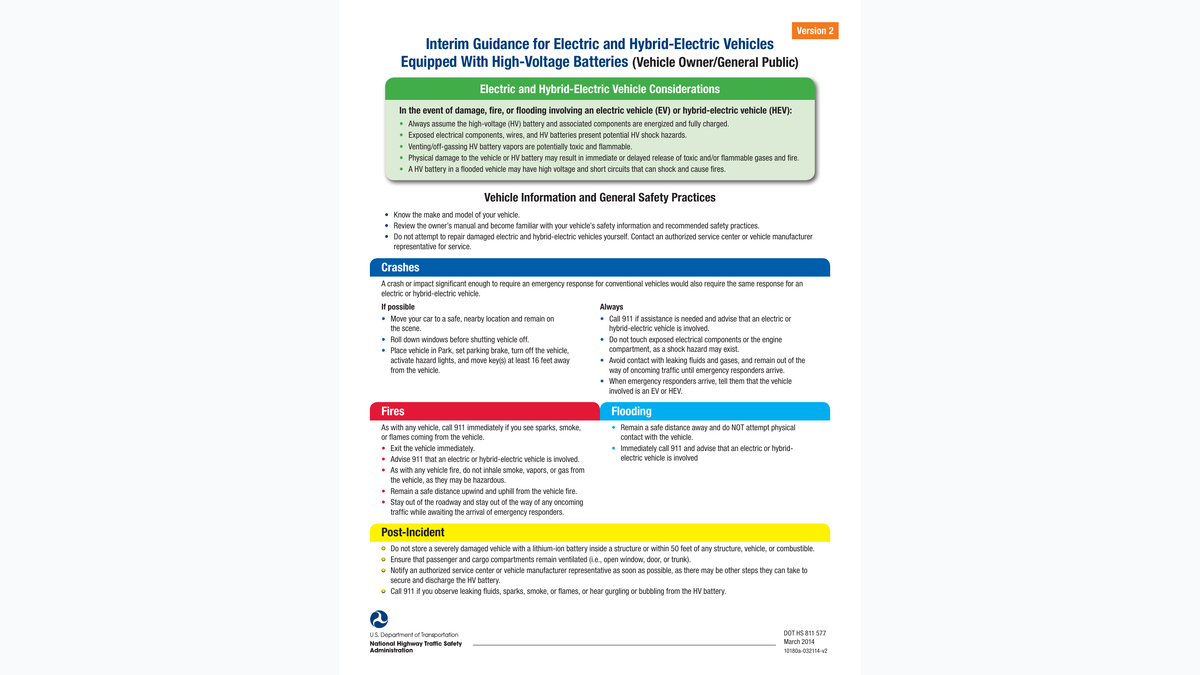
- This October 29 Owner Explainer is a safety guide based on current NHTSA pages, NHTSA’s high-voltage battery owner guidance and Tesla’s flooded-vehicle inspection note. It is not reporting a new recall or claiming that every flood-exposed battery is damaged.
- NHTSA warns that flooded EVs can present high-voltage shock, short-circuit and fire hazards, including delayed hazards after the water recedes.
- If there is smoke, fire, heat, sparks, bubbling, popping or hissing, move away, call 911 and tell responders an electric vehicle is involved.
- NHTSA says not to park a damaged lithium-ion vehicle in a garage or within 50 feet of a structure, another vehicle or combustible material.
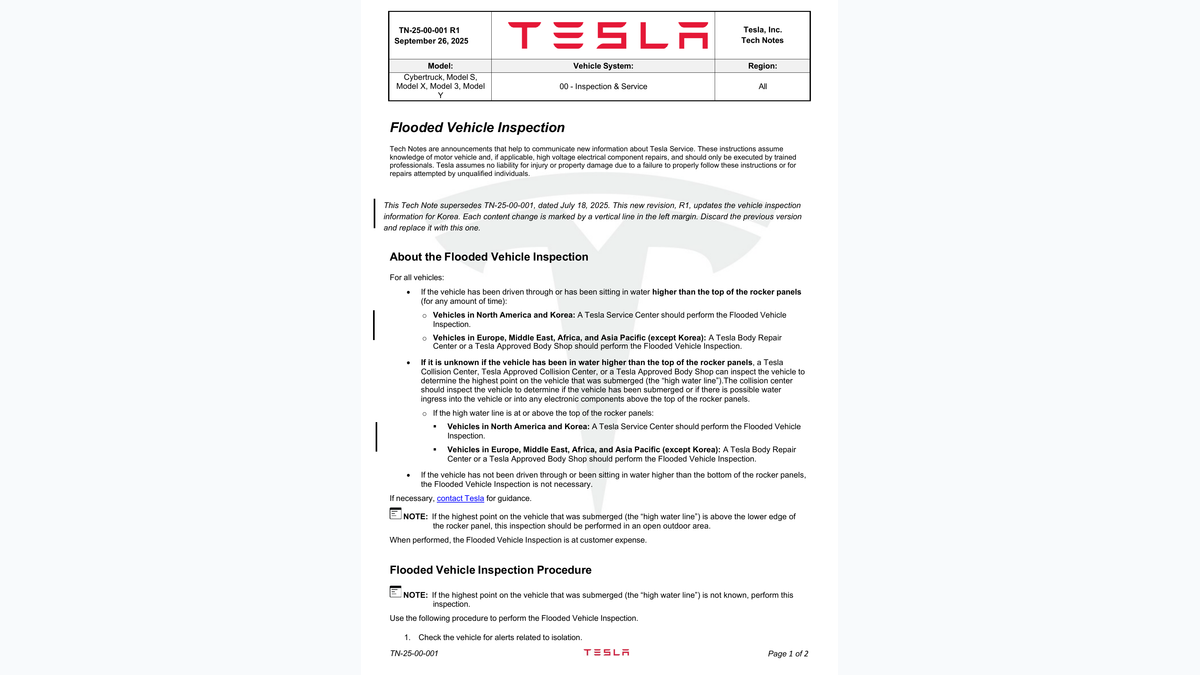
- Tesla’s professional inspection note calls for checking components below the high-water line and documenting suspected water ingress.
What Happened
Flood exposure creates a problem that is easy to underestimate: a vehicle may look intact after the water recedes while electrical, battery and corrosion damage remains hidden. NHTSA’s current owner pages warn that a flooded EV can have high voltage and short circuits that may shock people or start a fire.
Tesla’s own technical note shows why a visual glance is not enough. It directs Tesla and approved collision professionals to identify the high-water line, inspect electronic and high-voltage components below it, document water ingress and request remote diagnostics when needed.
What Is Confirmed
- High-voltage risk: NHTSA says flooded EVs may have high voltage and short circuits capable of causing shock and fire.
- Delayed risk: Physical battery damage can lead to immediate or delayed release of toxic or flammable gases and fire.
- Emergency signs: Smoke, sparks, flames, heat, bubbling, popping or hissing require distance and emergency response.
- Storage distance: NHTSA advises keeping a damaged lithium-ion vehicle out of a garage and at least 50 feet from structures, other vehicles and combustible material.
- Tesla inspection scope: Tesla’s current note identifies high-voltage battery components, drive units, high-voltage cables and connectors, the charge port and other electronics as possible inspection points after flooding.
- Professional escalation: Tesla’s document tells approved facilities to request remote diagnostics when water ingress is found or suspected in listed components.
What Remains Unconfirmed
Water exposure does not prove that every battery pack is damaged, and this article cannot determine the condition of a particular vehicle. Risk depends on water depth, duration, salinity, contamination, impact damage, vehicle condition and which components were below the water line.
A vehicle powering on is not proof that it is safe to drive or charge. Likewise, the absence of smoke immediately after a flood does not eliminate delayed electrical or thermal risk. Only a qualified inspection can assess a specific vehicle.
Why It Matters
Flood recovery often creates pressure to move a vehicle quickly, start it to test whether it works or store it near a home. Those actions can put people and property closer to an energized or damaged high-voltage system. NHTSA’s guidance emphasizes separation, responder notification and manufacturer contact because the hazard may not be visible.
Tesla’s repair note also makes clear that inspection is component-by-component. It does not reduce the decision to whether the cabin is wet; professionals may need to evaluate the battery, drive system, wiring, charge port and other electronics below the high-water line.
What Tesla Owners Should Know
- Do not enter moving floodwater. Protect people first. Follow local emergency instructions and never attempt to reach a vehicle through unsafe water.
- Move away from warning signs. If you see smoke, sparks or flames, hear bubbling, popping or hissing, or feel unusual heat, call 911 and identify the vehicle as electric.
- Do not use power-on as a test. Avoid driving, charging or attempting a do-it-yourself battery inspection after significant submersion.
- Separate the vehicle. Follow NHTSA’s 50-foot guidance for a damaged lithium-ion vehicle and keep it away from buildings, cars and combustible material.
- Contact insurance and Tesla Service. Explain the water depth, duration, whether it was salt water, and any warning signs. Arrange suitable towing and inspection.
- Tell the tow operator about flood exposure. The transporter needs to know that the vehicle has a high-voltage battery and may require special storage.
- Preserve evidence safely. From a safe location, record the high-water line, time and type of water for the insurer and repair facility. Do not touch exposed orange cables or battery components.
Tesstudio Analysis
The most important decision is not whether the Tesla still turns on; it is whether the owner can keep people away and transfer the vehicle to professionals without adding risk. NHTSA’s current advice and Tesla’s inspection procedure point in the same direction: separation, emergency response when warning signs appear, and a documented professional inspection.
Owners should resist shortcuts after salt-water or prolonged exposure. Corrosion and hidden water ingress can affect multiple systems, and a later symptom may matter as much as an immediate one. A written inspection record is more useful than a brief driveway test.
Related Tesla News Resources
Follow the Tesstudio Tesla News hub for verified Tesla owner and safety updates. No Related Gear placement is included because accessories are not an appropriate response to flood-damaged high-voltage equipment.
Sources & Reporting Notes
- Tesla Service: Flooded Vehicle Inspection, TN-25-00-001 R1 — primary Tesla repair guidance for professional inspection after flooding.
- NHTSA: Electric and Hybrid Vehicles—Battery, Charging and Safety — current federal owner guidance for flooding, battery damage and fire risk.
- NHTSA: Hurricane- and Flood-Damaged Vehicles — current guidance on wet EV batteries and separation from structures.
- NHTSA: High-Voltage Battery Vehicle Owner Guidance — official public guidance on damage, fire, flooding and post-incident storage.
Reporting note: Tesla’s technical note is written for service and collision professionals; this article does not convert it into do-it-yourself repair instructions. NHTSA supplies the owner-facing emergency and storage guidance. No claim is made that a recall exists or that every flood-exposed battery has failed.
Update & Correction Log
October 29, 2026: Initial Owner Explainer published from Tesla and NHTSA primary records. The article separates confirmed safety guidance from vehicle-specific unknowns and identifies Tesla’s inspection note as professional guidance.



댓글 남기기
이 사이트는 hCaptcha에 의해 보호되며, hCaptcha의 개인 정보 보호 정책 과 서비스 약관 이 적용됩니다.