
Owner Explainer: How Tesla Charge Stats Estimates Costs and Gas Savings
Owner Explainer · Tesla Primary Documentation + DOE Context

Tesla Charge Stats estimates charging costs, gas savings and miles added from charging energy, vehicle assumptions and the rates assigned to each location. Improve accuracy by entering the correct home, work and other rates, then compare the result with actual bills and receipts.
30-Second Brief
- This Owner Explainer is dated September 4, 2026 in America/Los_Angeles. It summarizes current documentation and does not claim Charge Stats launched or changed today.
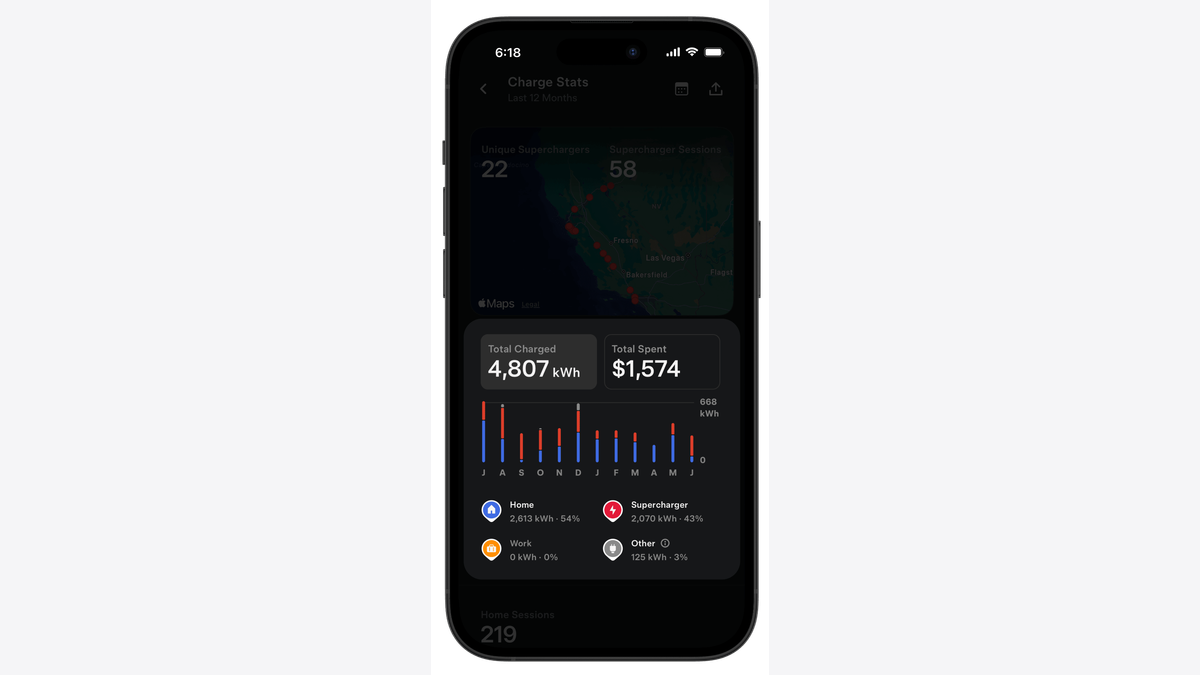
- Tesla says Charge Stats separates Home, Supercharger, Work and Other charging, then combines their estimated costs into Total Spent on Charging.
- Gas Savings equals an estimated gasoline-vehicle equivalent cost minus estimated charging spend; it is not a cash rebate or guaranteed savings figure.
- Total Miles Added is also an estimate based on energy added and ideal efficiency for the vehicle model and trim, so it can differ from odometer miles.
- Owners can improve the model by selecting a utility plan or entering custom time-of-use, seasonal, work and other-location rates.
What Happened
Tesla maintains a detailed Charge Stats support page explaining how the app groups charging activity and calculates cost, savings and mileage estimates. The feature can help an owner see patterns across charging locations, especially when home rates change by time of day.
This is a current owner explainer published under Tesstudio’s mandatory fallback policy after seven complete no-publication hours and with zero posts on the new Los Angeles day. The underlying documentation is not presented as a same-window Tesla announcement.
What Is Confirmed
- Total charging spend: Tesla defines it as Home cost plus Supercharger cost plus Work cost plus Other-location cost.
- Gas Savings formula: Tesla subtracts Total Spent on Charging from an estimated gasoline-vehicle equivalent cost.
- Miles-added estimate: Tesla uses energy added and ideal regional efficiency for the relevant vehicle model and trim.
- Rate controls: Owners can select a listed home utility plan or enter custom time-of-use and seasonal rates, including separate buy and sell prices where applicable.
- Default assumptions: Tesla says Work and Other may use an average estimated regional electricity cost until the owner customizes those locations.
- Independent method context: DOE’s AFDC says EV cost per mile requires both electricity price per kWh and vehicle energy consumption.
What Remains Unconfirmed
Charge Stats does not establish that every displayed dollar matches a utility invoice, workplace agreement or final Supercharger charge. The support page describes estimates; local taxes, fixed utility charges, charging losses, session-level fees and delayed data can affect reconciliation.
The gasoline comparison also does not prove what a particular owner would have spent in a specific replaced vehicle. Tesla describes a comparable gasoline-vehicle estimate, while real fuel economy, fuel price, route and driving style vary.
Why It Matters
Charging-cost claims often mix measured energy, estimated location prices and a hypothetical gasoline comparison. Reading those layers separately helps owners understand whether a change came from driving more, charging somewhere different or using an outdated rate.
DOE’s cost framework reinforces the key point: price per kWh and energy used per distance both matter. A low electricity rate can still produce a misleading budget forecast if the location price is wrong or if charging and driving patterns change.
What Tesla Owners Should Know
- Check feature access. Tesla says Charge Stats requires vehicle software 2021.44.25 or later, Tesla app 4.5.1 or later and an eligible owner or business-account role.
- Verify Home and Work addresses. Incorrect saved locations can cause sessions to appear under Other.
- Enter the current home tariff. Match seasons, weekdays, weekends and time-of-use periods; update the plan when the utility changes rates.
- Customize Work and Other. Replace regional default estimates with known prices, including zero where workplace charging is genuinely free.
- Allow for reporting delay. Tesla says charging data can take up to 24 hours to appear, depending on connectivity.
- Reconcile monthly. Compare kWh and spend with utility bills, Supercharger history and other charging receipts.
- Treat miles added separately. Do not expect the energy-based ideal estimate to equal odometer miles after weather, speed and accessory use.
Tesstudio Analysis
Tesstudio scores this owner explainer at 72. The central formulas, settings and limitations are readable in current Tesla primary documentation, and DOE provides independent cost-method context. The score remains below the normal new-story threshold because there is no same-window product announcement.
The best use of Charge Stats is directional: identify where and when energy was added, keep rate inputs current and investigate large changes. For exact accounting, the owner should still rely on the underlying utility bill and charging receipts.
Related Tesla News Resources
For session-level evidence, see Tesstudio’s guide to Tesla charging billing verification. This Charge Stats explainer focuses on app estimates rather than cryptographic meter-record validation. No Related Gear placement is included because the evidence does not establish an accessory need.
Sources & Reporting Notes
- Tesla: Understanding Charge Stats — primary documentation for feature access, cost categories, formulas, rate settings, data delay and both estimate boundaries.
- Tesla: Tesla App Support — primary app-access context and source of the lead photograph.
- U.S. Department of Energy Alternative Fuels Data Center: Charging Electric Vehicles at Home — independent public guidance on electricity price, energy consumption and cost-per-mile calculations.
Reporting note: Tesla feature descriptions are attributed to current Tesla support documentation. DOE provides general calculation context and does not endorse Tesla or Tesstudio. The article distinguishes estimates from actual bills, receipts and signed meter records.
Update & Correction Log
September 4, 2026: Initial Owner Explainer, published in mandatory fallback mode after seven complete no-publication hours and with zero Tesla News posts on the new America/Los_Angeles day.


댓글 남기기
이 사이트는 hCaptcha에 의해 보호되며, hCaptcha의 개인 정보 보호 정책 과 서비스 약관 이 적용됩니다.