
Docomo Starlink Direct Passes 6.5 Million Users as V2 Targets 5G Speeds
Confirmed Milestone · Docomo Primary Record + Starlink Roadmap
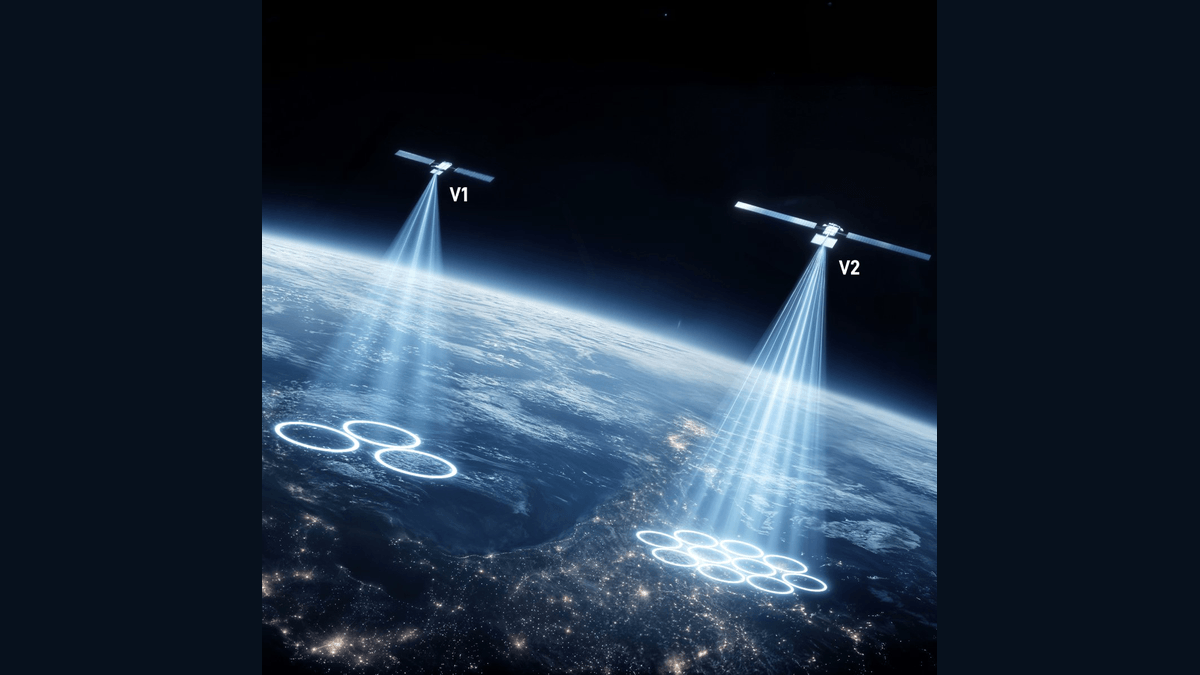
Docomo Starlink Direct has passed 6.5 million connected users in Japan, according to Docomo’s official service page. Today’s Starlink Mobile Japan service supports selected apps and messaging outside terrestrial coverage but not voice calls. Starlink says a future Starlink Mobile V2 service will target 5G speeds, streaming, browsing and voice, without giving a Japan launch date.
30-Second Brief
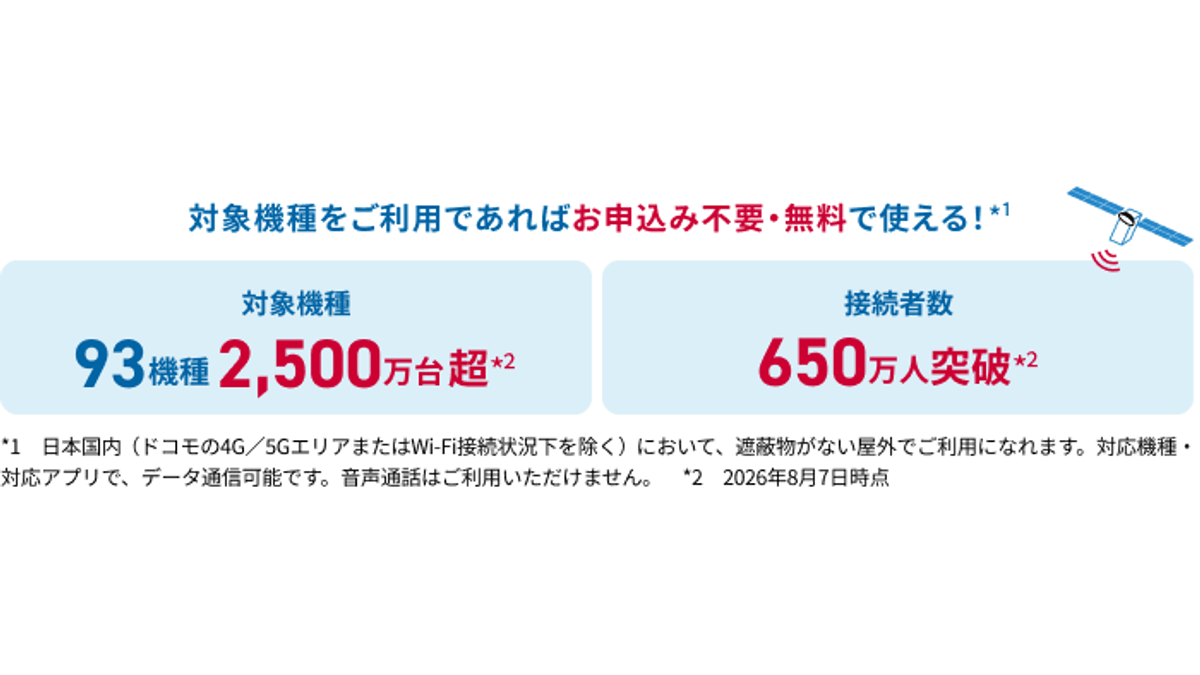
- Docomo says docomo Starlink Direct exceeded 6.5 million connected users as of August 7, up from the 5 million milestone announced on July 9.
- The current service page lists 93 supported phone models representing more than 25 million devices.
- Eligible Docomo customers can use the service without applying and without a monthly charge under the current terms.
- Current V1 access covers messages, location sharing, files and selected apps outside Docomo terrestrial coverage; Docomo explicitly says voice calls are unavailable.
- Starlink says future V2 service in Japan will provide 5G speeds, streaming, browsing and voice, but it did not publish a launch date, tested speed or commercial terms.
What Happened
Starlink highlighted Japan as a live example of its satellite-to-mobile expansion, saying Docomo’s current V1 service is connecting more than 6.5 million customers in remote locations. The figure is independently visible on Docomo’s official service page, where the carrier dates the milestone to August 7.
The same Starlink post paired that current milestone with a forward-looking V2 promise: 5G speeds delivered to ordinary mobile phones, with streaming, web browsing and voice calls. That second claim describes a future service rather than functionality available to Docomo users today.
What Is Confirmed
- Current milestone: Docomo reports more than 6.5 million connected users as of August 7, 2026.
- Eligible device base: The current page lists 93 supported models and more than 25 million eligible devices.
- Current price and enrollment: Docomo says eligible customers on its plans, including ahamo, can use the service without applying and with no monthly fee under present terms.
- Current functions: Messaging, location sharing, file transfer, emergency alerts and selected-app data are supported, subject to device, software, SIM/eSIM, ISP and app requirements.
- Coverage boundary: The service is for outdoor areas with an unobstructed sky where Docomo 4G/5G and Wi-Fi are unavailable.
- Voice limitation: Docomo explicitly says current satellite voice calls are not available.
What Remains Unconfirmed
Starlink did not give a Japan release date for V2, a tested download or upload range, latency, network capacity, compatible-device list, price, data allowance or regulatory schedule. “5G speeds” should therefore be read as the company’s product target, not a measured result for Japanese customers.
The 6.5 million figure is also a connected-user count reported by Docomo, not a paid-subscriber total or an independently audited measure of daily active usage. Docomo’s page does not publish its counting methodology. The service is free and requires no application for eligible customers, so connection counts should not be treated as revenue or subscription figures.
Why It Matters
Japan is one of the clearest large-scale tests of satellite-to-phone service on ordinary carrier plans. Growth from 5 million reported connections on July 9 to 6.5 million by August 7 suggests that users are reaching the service at meaningful scale, even while the feature set remains constrained.
The V2 roadmap would materially change the use case if it delivers. Moving from selected apps and messaging to streaming, browsing and voice could make satellite coverage behave more like a normal mobile layer. The unanswered questions are capacity, reliability, device support, regulation and price.
What Tesla Owners Should Know
- This is phone connectivity, not Tesla vehicle connectivity. Nothing in the announcement adds Starlink service to a Tesla car.
- Check the current device list. Eligibility depends on a supported Docomo phone, updated software and a compatible UIM card or eSIM.
- Do not expect current voice service. V1 supports selected apps and messages; V2 voice is a future company claim.
- Use it where terrestrial coverage is absent. Docomo says the satellite link is not used inside its 4G/5G footprint or while connected to Wi-Fi.
- Keep an unobstructed view of the sky. Buildings, terrain and indoor use can prevent or interrupt a satellite connection.
- Recheck terms before relying on it. Docomo says pricing and conditions may change and some services can be limited during emergencies or heavy use.
Tesstudio Analysis
The confirmed story is adoption, not 5G performance. Docomo’s 6.5 million count and expanding device base show that satellite-to-phone service can reach a mass-market carrier audience without a separate dish or paid add-on. The present experience is still a safety and basic-connectivity layer rather than a full substitute for terrestrial mobile broadband.
V2 could close that gap, but Starlink’s post leaves every decision-critical variable open. We would look for a Docomo launch notice, approved spectrum and device details, measured speeds under load and a clear pricing model before treating the V2 promise as a commercial service.
Related Tesla News Resources
Follow the Tesstudio Tesla News hub for verified Starlink, SpaceX and Tesla developments. No Related Gear or purchase call-to-action is included because Tesstudio’s vehicle-accessory catalog is not directly relevant to Docomo’s phone service.
Sources & Reporting Notes
- Starlink: Docomo V1 milestone and Japan V2 roadmap — current primary company statement, August 14, 2026.
- NTT Docomo: docomo Starlink Direct service page — current primary record for the 6.5 million milestone, device count, availability and service limits.
- NTT Docomo: April 2026 launch release — primary launch terms, coverage, eligibility and supported-function context.
Reporting note: Docomo’s current milestone and service conditions are reported as carrier figures. Starlink’s V2 speed and feature statements are explicitly labeled as a future company roadmap. Tesstudio found no Docomo V2 launch notice or measured Japan performance record in this reporting window.
Update & Correction Log
August 14, 2026: Initial publication. The article separates Docomo’s confirmed V1 milestone and current limitations from Starlink’s future V2 performance claims.


댓글 남기기
이 사이트는 hCaptcha에 의해 보호되며, hCaptcha의 개인 정보 보호 정책 과 서비스 약관 이 적용됩니다.