
Tesla Launches Semi High-Volume Production and Starts New Deliveries
Confirmed · Tesla Records + Reuters Delivery Report
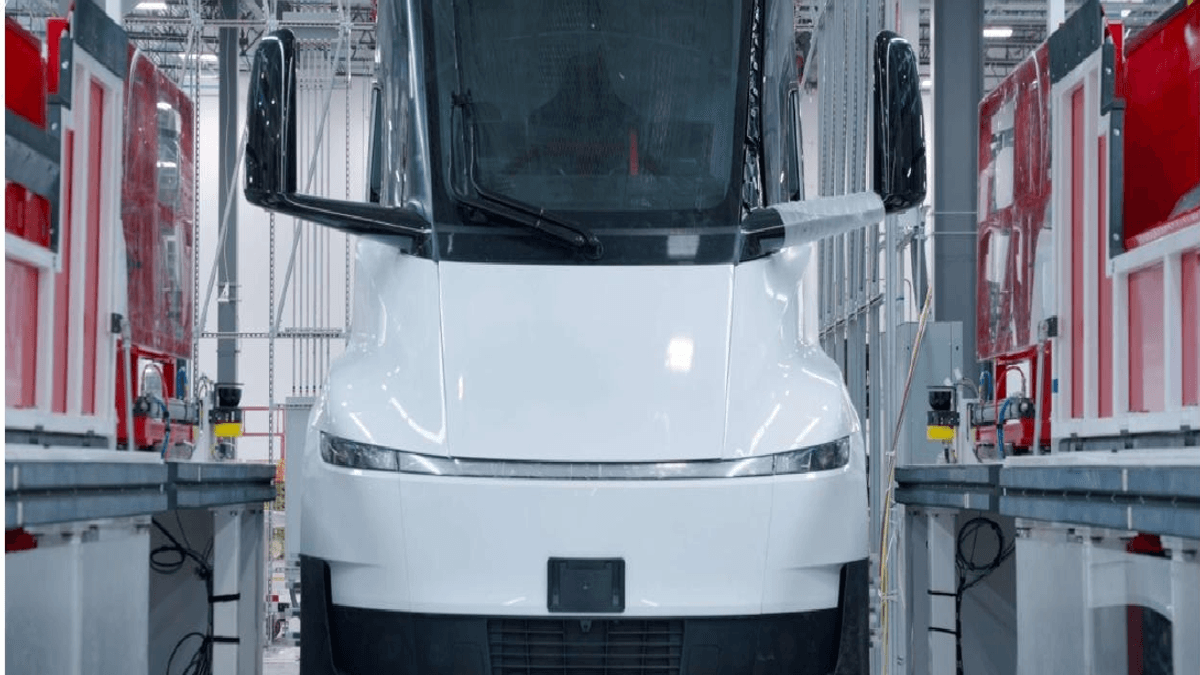
Tesla Semi high-volume production has been formally launched at the company’s Nevada truck factory, and Tesla Semi deliveries began this week to an initial customer group, according to Reuters. Tesla now lists 325-mile and 500-mile Semi variants with up to 1.2 MW Megacharging, but current output and pricing remain undisclosed.
30-Second Brief
- Tesla used its September 24 event in Sparks, Nevada, to announce what it calls the launch of high-volume Semi production.
- Reuters reports deliveries began this week to a first set of customers and names PepsiCo, DHL and US Foods.
- Tesla did not disclose the plant’s current production volume or truck pricing during the event.
- Tesla’s current product page lists Standard Range and Long Range options at an estimated 325 and 500 miles, respectively.
- The company lists 1.7 kWh per mile estimated energy consumption, up to 1.2 MW Megacharging and a 120 kW Basecharger option.
What Happened
Tesla presented its dedicated Semi operation in Sparks on September 24 and said it was launching high-volume production. Reuters reported after the event that customer deliveries were beginning during the week, moving the program beyond earlier limited fleets and into a wider commercial rollout.
The distinction between a production launch and current output matters. Tesla reiterated long-term factory ambitions at the event but did not give a present production rate. The verified development is that the dedicated program has entered a new stage and a first customer group is receiving trucks.
What Is Confirmed
- Customer deliveries: Reuters reports deliveries began this week to an initial group that includes PepsiCo, DHL and US Foods.
- Production framing: Tesla calls the event the launch of high-volume production. Tesstudio treats that as a company-reported milestone.
- Two order options: Tesla’s current fleet form lists Semi Standard Range and Semi Long Range.
- Range: Tesla lists estimated ranges of 325 miles for Standard Range and 500 miles for Long Range under its specified test assumptions.
- Energy use: Tesla lists estimated consumption of 1.7 kWh per mile.
- Charging: Tesla lists up to 1.2 MW for Megacharger and 120 kW for Basecharger, with the charging-time claims tied to configuration and stated conditions.
What Remains Unconfirmed
Tesla did not disclose how many trucks are currently leaving the line per week or month, how quickly that rate will rise, or the prices customers are paying. A plant’s intended annual capacity is not the same as its present annualized output.
The company also has not published a customer-by-customer delivery schedule, a verified backlog, or independent operating data for the new production cohort. Range, energy use, charging speed and total cost will vary with payload, speed, weather, trailer aerodynamics, electricity prices and route design.
Why It Matters
The new deliveries turn Semi’s long development period into a manufacturing and fleet-operations test. Tesla must now demonstrate repeatable factory output, charging deployment, service support and uptime across customers with different freight patterns.
For the heavy-duty market, the most useful measures are no longer prototype range runs or headline plant capacity. They are delivered units, loaded-route efficiency, charge dwell time, maintenance availability and total cost per mile over sustained operations.
What Tesla Owners Should Know
- This does not affect passenger-car availability. Semi is a commercial Class 8 product with separate ordering, service and charging requirements.
- “High volume” is Tesla’s label. Wait for disclosed production and delivery data before translating the phrase into a unit rate.
- Capacity is not output. A factory target describes what the site is designed to support, not what it is producing today.
- Charging context matters. Megacharger and Basecharger figures are not interchangeable with passenger Supercharging.
- Route economics will decide adoption. Payload, electricity prices, driver schedules, depot power and uptime will shape fleet results.
Tesstudio Analysis
This event clears the publication threshold because it combines a company production milestone with independent Reuters confirmation that new customer deliveries have begun. The strongest verified claim is the delivery transition; the weakest is the undefined scale behind Tesla’s “high-volume” wording.
Tesstudio scores the event 93.2. The next update should be driven by hard operating evidence: cumulative deliveries, a disclosed production rate, customer route data, charging coverage or pricing—not another restatement of nameplate capacity.
Related Tesla News Resources
Follow the Tesstudio Tesla News hub for verified Tesla manufacturing, charging and fleet updates. No Related Gear module is included because Tesstudio’s passenger-vehicle accessories are not directly relevant to a Class 8 truck rollout.
Sources & Reporting Notes
- Tesla Semi product page — primary company source for current order options, specifications, charging and configuration assumptions.
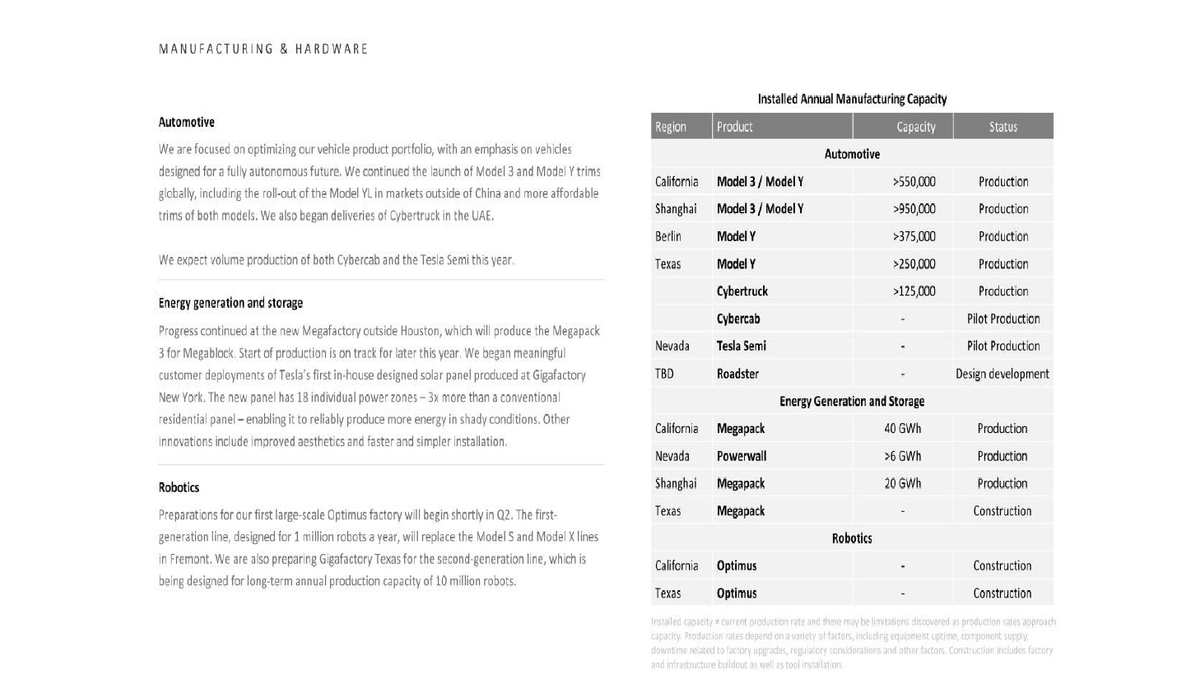
- Tesla Q1 2026 Update — primary dated record for Nevada Semi status, the 2026 volume-production expectation and the official visuals used here.
- Reuters via Fidelity: Tesla is beginning Semi electric truck deliveries — independent September 24 reporting on customer deliveries, named customers and undisclosed production volume and pricing.
Reporting note: Tesla’s “high-volume production” description and product specifications are attributed to the company. Reuters independently confirms that deliveries began this week and reports the limits of what Tesla disclosed. Both visuals come from Tesla’s official Q1 2026 update and retain the required “Courtesy of Tesla, Inc.” notice.
Update & Correction Log
September 25, 2026: Initial publication. The article separates Tesla’s high-volume production label and factory ambitions from verified current output, and it identifies which specifications are company estimates.



Laisser un commentaire
Ce site est protégé par hCaptcha, et la Politique de confidentialité et les Conditions de service de hCaptcha s’appliquent.