
Owner Explainer: Tesla Model 3 Maintenance Summary, Filters and Brake Checks
Owner Explainer · Current Tesla Documentation · September 5, 2026

A Tesla Model 3 maintenance schedule is not a traditional annual tune-up. Tesla says service is generally need-based, but the current guide still lists a four-year brake-fluid health check, a two-year cabin air filter interval, annual wipers and climate-dependent brake-caliper care. The Tesla Maintenance Summary helps track work, but owners must keep it accurate.
30-Second Brief
- Tesla's current Model 3 DIY documentation says the vehicle should generally be serviced as needed; that does not mean it has no recurring maintenance.
- The guide lists a brake-fluid health check every four years, with replacement only if necessary. Heavy braking, towing, mountain descents, heat and humidity can justify earlier checks.
- For Model 3, Tesla lists cabin-filter replacement every two years, or every year in China, and wiper-blade replacement every year.
- In salted-road regions, Tesla lists brake-caliper cleaning and lubrication every year or 12,500 miles, as applicable.
- The in-car Maintenance Summary records work, dates and mileage and survives a factory reset, but the owner remains responsible for record accuracy.
What Happened
This is a dated owner explainer, not a claim that Tesla announced a new maintenance program today. Tesstudio reviewed Tesla's current Model 3 service-interval page, cabin-filter replacement procedure and DIY index on September 5, 2026 in America/Los_Angeles after the hourly fallback threshold was reached.
The practical point is easy to miss: electric vehicles remove oil changes, spark plugs and several combustion-engine routines, but they still have filters, brake fluid, wipers, tires, brakes and other consumables or inspection items. Tesla organizes these around need, environment and the Maintenance Summary rather than a universal annual service visit.
What Is Confirmed
- Service approach: Tesla says Model 3 should generally be serviced on an as-needed basis, while still recommending recurring items where applicable.
- Brake fluid: The current DIY interval page lists a health check every four years and replacement if necessary. It says towing, mountain descents, performance driving, hot weather and humidity may require more frequent attention.
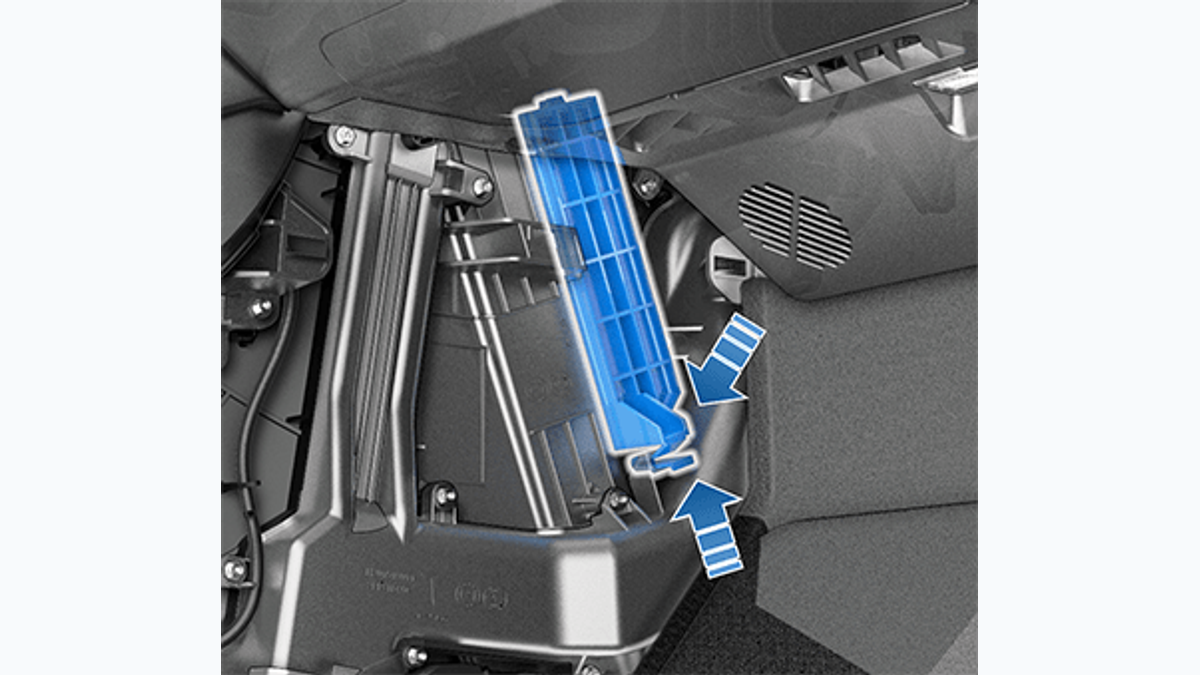
- Cabin filters: Tesla lists Model 3 cabin-filter replacement every two years, or every year in China. Dusty or polluted environments can justify different timing.
- Wipers: Tesla lists annual wiper-blade replacement in the Model 3 DIY interval page.
- Salted-road brakes: The page lists cleaning and lubricating brake calipers every year or 12,500 miles in areas where roads are salted during winter.
- Tires: Tesla lists rotation every 6,250 miles or when tread-depth difference reaches 2/32 inch, whichever comes first. Tesstudio maintains a separate tire-rotation explainer for that procedure.
- Maintenance Summary: The touchscreen record can store when an item was performed, capture time and mileage, suggest future work and persist through a factory reset.
What Remains Unconfirmed
The documents do not establish that every Model 3 needs every listed procedure at exactly the same time. Tesla repeatedly narrows the guidance by model year, vehicle configuration, region, driving pattern and environmental conditions. A vehicle alert, its current Maintenance Summary and the guide that matches the exact car take priority over a generic calendar.
A recorded item is not proof that a repair was correctly completed. Tesla says the owner is responsible for the accuracy of entries, particularly after independent or do-it-yourself work. The DIY guide also does not make every procedure appropriate for every owner; it says to work only when comfortable and to follow all warnings.
Why It Matters
Maintenance errors at both extremes are costly. Treating an EV like a gasoline car can create unnecessary visits, while treating it as maintenance-free can leave filter, fluid, brake, tire or visibility issues unattended. The Tesla approach is to pair a small set of recurring intervals with condition-based alerts and environmental adjustments.
The service record also travels with the car. Tesla says Maintenance Summary history persists through a factory reset, making careful entries useful for the current owner and a future buyer. That value depends on accurate records rather than simply resetting an overdue reminder.
What Tesla Owners Should Know
- Open Maintenance Summary. On the touchscreen, use Controls > Service > Maintenance and review overdue, due-soon and future items.
- Match the exact vehicle. Confirm model year, market, equipment and current Tesla documentation before using any generic interval.
- Record completed work honestly. Add the date and mileage after Tesla, an independent shop or you actually complete the maintenance.
- Adjust for conditions. Road salt, dust, pollution, heat, humidity, towing and mountain driving can move checks earlier.
- Respect DIY boundaries. The cabin-filter guide places orange high-voltage cables near the cover. Stop if the vehicle differs from the documented configuration or if any high-voltage component could be damaged.
- Use alerts as action items. A warning or abnormal condition can require service before the calendar interval.
Tesstudio Analysis
Tesstudio scores this owner explainer 72.5. It is not same-window breaking news, but it qualifies under mandatory fallback because the daily count remained below four after five complete no-publication hours and the guidance is current, directly verifiable and operationally useful.
The strongest takeaway is that “as needed” and “maintenance-free” are not synonyms. Tesla's own documentation gives owners a compact system: follow vehicle-specific reminders, preserve accurate records, use defined intervals as a baseline and shorten them when driving conditions justify it.
Sources & Reporting Notes
- Tesla Model 3 Do It Yourself: Vehicle Service Intervals — primary source for need-based service, recurring intervals and Maintenance Summary behavior.
- Tesla Model 3 Do It Yourself: Replacing Cabin Filters — primary source for the replacement interval, vehicle-configuration differences, the high-voltage cable warning and resetting the maintenance item.
- Tesla Model 3 Do It Yourself Guide — current Tesla index of owner procedures and safety boundaries.
Reporting note: This fallback explainer is dated September 5, 2026 in America/Los_Angeles and does not present the underlying guidance as a new announcement. Recommendations are Tesla's and may vary by model year, market, configuration, use and environment. Both visuals are official Tesla documentation assets resized without generative alteration.
Update & Correction Log
September 5, 2026: Initial publication based on three current, readable Tesla Service documents. The article separates recurring baseline intervals from vehicle-specific and condition-based maintenance.



Laisser un commentaire
Ce site est protégé par hCaptcha, et la Politique de confidentialité et les Conditions de service de hCaptcha s’appliquent.