
Verified Brief: Tesla Patent Targets Windshield Haze Around Front Cameras
Verified Brief · Published Patent Application
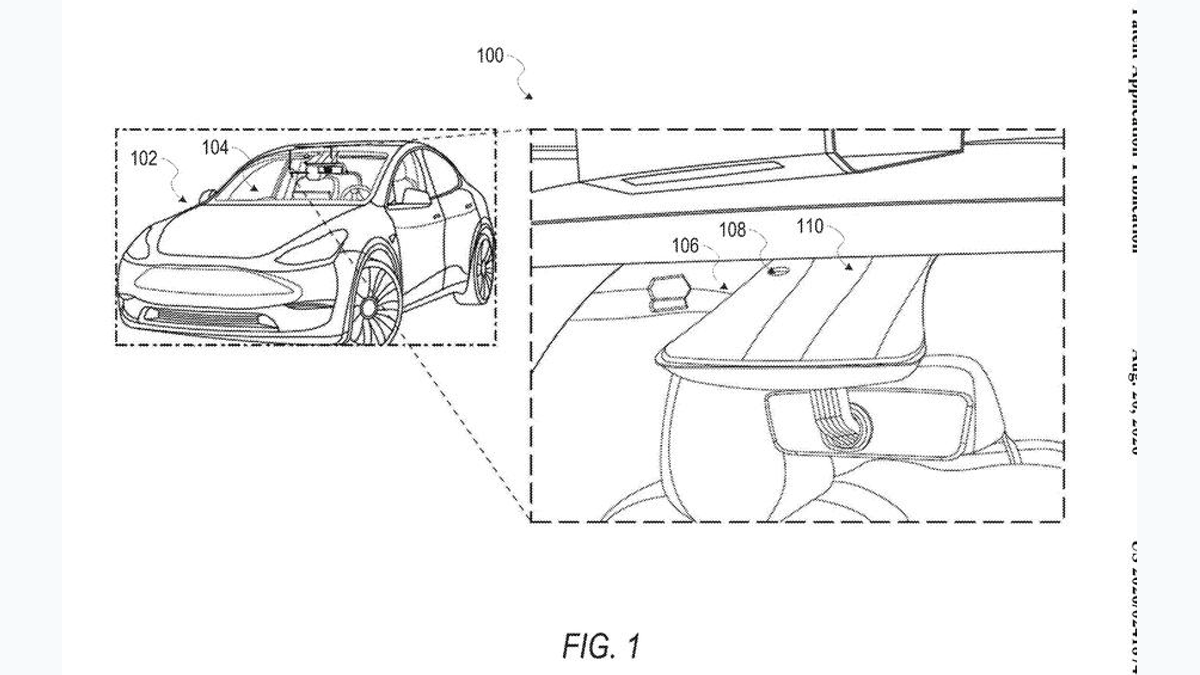
Tesla's published camera-haze patent application proposes putting VOC-absorbing material into plastic parts around windshield-mounted cameras. The filing is real and dated August 20, 2026, but it does not confirm a production Tesla feature, a rollout date or a new owner repair procedure.
30-Second Brief
- U.S. patent application US 2026/0241874 A1 was published on August 20, 2026 and lists Tesla, Inc. as the applicant.
- The filing describes plastic components near windshield cameras containing microporous crystalline aluminosilicate particles designed to trap volatile organic compounds and semi-volatile organic compounds.
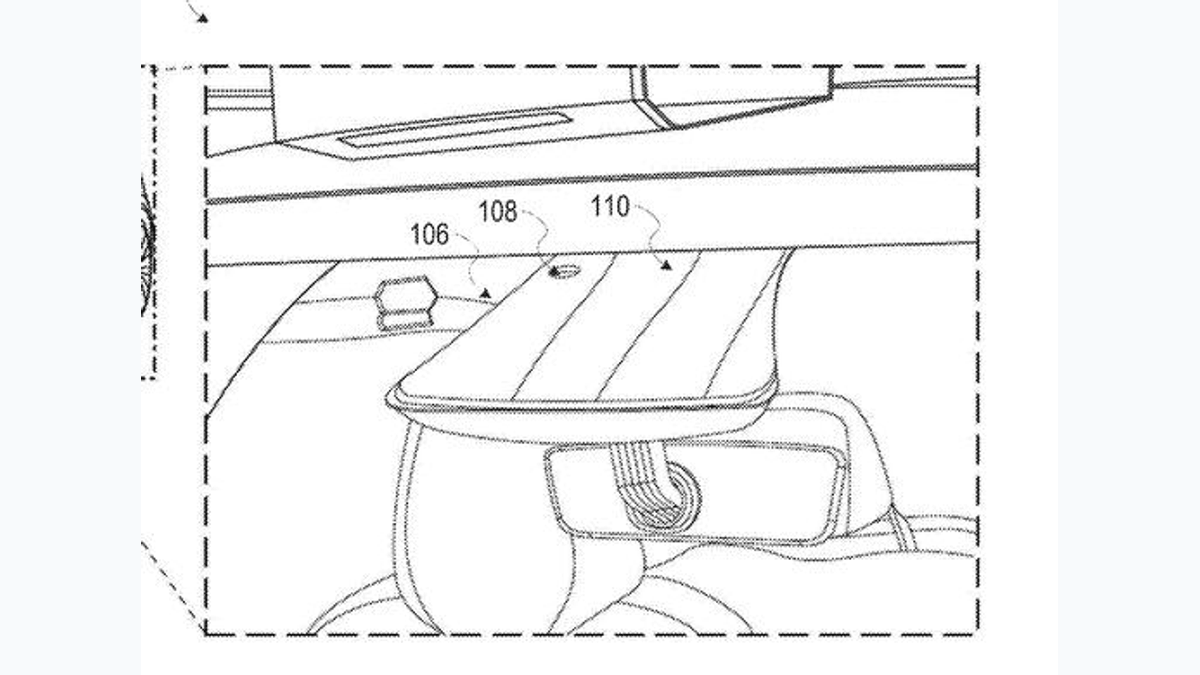
- Example components include a glare shield, camera bracket, nearby trim and lens hood.
- The document says accumulated compounds can condense on the windshield and degrade the view of camera-based driver-assistance systems.
- The filing does not establish production use, effectiveness in customer vehicles, compatible models or a release date.
What Happened
A Tesla patent application published August 20 describes a materials-based approach to a familiar optical problem: compounds released by cabin plastics and adhesives can migrate to the inside of the windshield and form a film near the forward camera area. The proposed system moves the mitigation into components already positioned around the sensor housing.
The application describes polypropylene resin mixed with microporous crystalline aluminosilicate particles. In examples, the particles have controlled pore sizes intended to attract and trap particular volatile compounds before those compounds reach the glass. Independent patent databases and a same-day Tesla specialist report surfaced the application during the current news window.
What Is Confirmed
- Public record: the application number is 19/538,447 and the publication number is US 2026/0241874 A1.
- Dates: the record lists a February 12, 2026 filing date and an August 20, 2026 publication date.
- Applicant: the published record identifies Tesla, Inc.
- Proposed material: the filing describes resin with integrated microporous crystalline aluminosilicate particles, including examples around 70% by weight.
- Proposed locations: glare shields, brackets, trim components and lens hoods near windshield-mounted sensors are named.
- Technical purpose: the application says the material is intended to trap volatile compounds before they condense on glass in a camera's field of view.
What Remains Unconfirmed
No cited record confirms that Tesla has approved the design for production, selected a supplier, manufactured a customer part or installed it in a particular model. The application does not provide a rollout date, vehicle identification range, retrofit plan or service campaign.
The filing also does not supply independent durability tests or field data showing how much haze the material prevents over years of heat cycles and cabin exposure. A patent can protect a design that is never commercialized, so the technical description should not be read as a product announcement.
Why It Matters
Forward cameras support driver-assistance functions that depend on a clear optical path. A passive material that captures compounds before they form a film could reduce one maintenance and reliability variable without adding a powered mechanism or replaceable filter.
The larger significance is Tesla's choice to address the problem at the materials level. Instead of only making a housing easier to open and clean, the application proposes changing nearby plastic so it absorbs the compounds that can create the film. Whether that approach is durable, manufacturable and cost-effective remains to be demonstrated.
What Tesla Owners Should Know
- This is not a recall. The application does not identify affected vehicles or require owner action.
- It is not a repair instruction. Do not remove a camera housing based on a patent article; use the manual for the exact vehicle or Tesla Service.
- Take visibility warnings seriously. If a vehicle reports blocked or degraded cameras, check externally accessible glass and follow current in-car or service guidance.
- Do not assume your vehicle has this material. No model, factory or part number is confirmed.
- Watch for production evidence. A parts catalog entry, service document, supplier record or Tesla product announcement would be a stronger commercialization milestone.
Tesstudio Analysis
The application is credible evidence of an engineering direction, not evidence of deployment. Its narrowest useful takeaway is that Tesla has documented a passive absorber concept positioned close to the camera housing, with the proposed material distributed throughout plastic rather than applied only as a surface coating.
Our view: the most important next evidence is not another patent summary. It is a dated production part, a service-manual revision or controlled test data comparing haze accumulation with and without the proposed material. Until then, owner guidance and feature-availability claims should remain unchanged.
Related Tesla News Resources
Follow the Tesstudio Tesla News hub for verified Tesla hardware, software and owner-support developments. This article contains no product placement because Tesstudio's accessory catalog is not directly relevant to an internal camera-housing material.
Sources & Reporting Notes
- USPTO: US 2026/0241874 A1 — primary public patent-application record, published August 20, 2026.
- Justia Patents: System to Prevent Camera Obstruction Using VOC Absorbers — independent record of the abstract, claims, dates, applicant and inventors.
- Patentlyze: Tesla VOC-Absorbing Camera Plastic — independent patent analysis and source of the public-record figure mirror.
- Not a Tesla App: Tesla Patent Helps Keep FSD Cameras Clear — specialist report published August 24 at 19:20 UTC.
Reporting note: This Verified Brief was published August 24, 2026 in America/Los_Angeles during normal mode. It preserves the patent's August 20 publication date and does not describe the concept as a production feature, recall, repair or proven safety improvement. Both visuals are crops of the same public patent figure and were resized without generative alteration.
Update & Correction Log
August 24, 2026: Initial publication. The article separates the published patent record from unconfirmed production, compatibility, timing and effectiveness claims.


Laisser un commentaire
Ce site est protégé par hCaptcha, et la Politique de confidentialité et les Conditions de service de hCaptcha s’appliquent.