
Verified Update: SpaceX CRS-35 Launches With 6,300 Pounds of ISS Cargo
Verified Update · NASA Primary Confirmation + Independent Launch Report
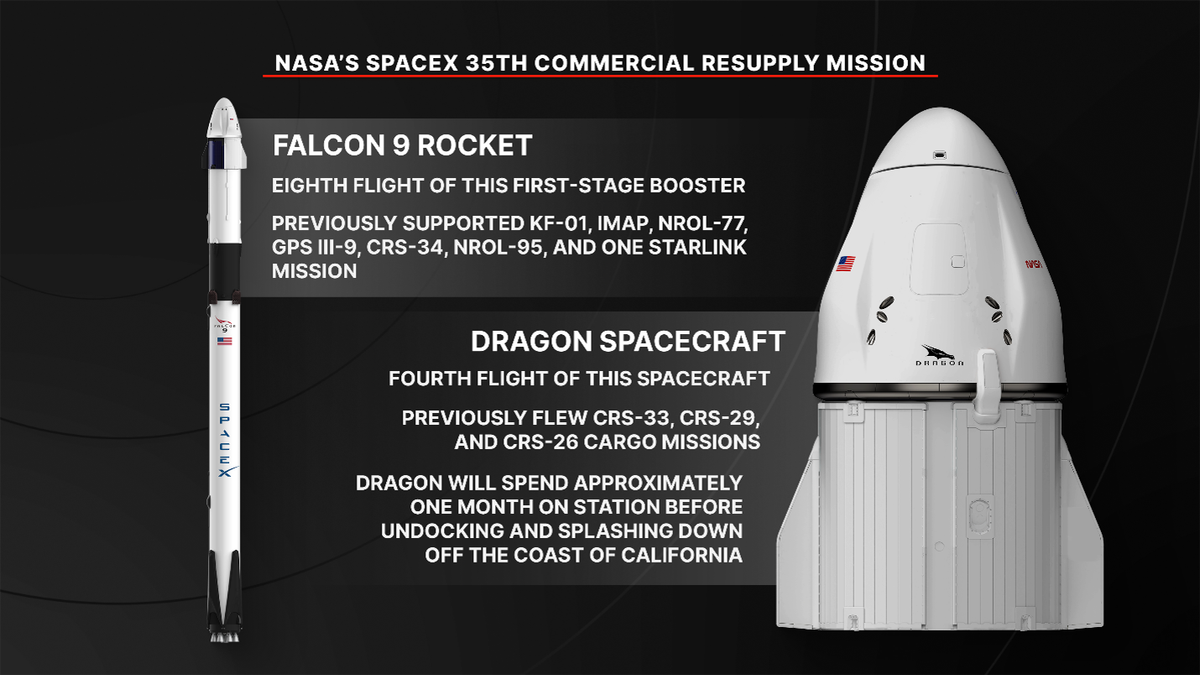
SpaceX CRS-35 launched at 6:33 a.m. EDT on October 13. NASA says Cargo Dragon is carrying more than 6,300 pounds of science and supplies, including the final pair of ISS Roll-Out Solar Arrays. Independent reporting confirms Dragon separation and the landing of Falcon 9 booster B1096; docking remains a future milestone.
30-Second Brief
- NASA confirms Falcon 9 and Cargo Dragon lifted off from SLC-40 at 6:33 a.m. EDT (10:33 UTC) on October 13, 2026.
- Dragon is carrying more than 6,300 pounds of supplies and hardware to the International Space Station.
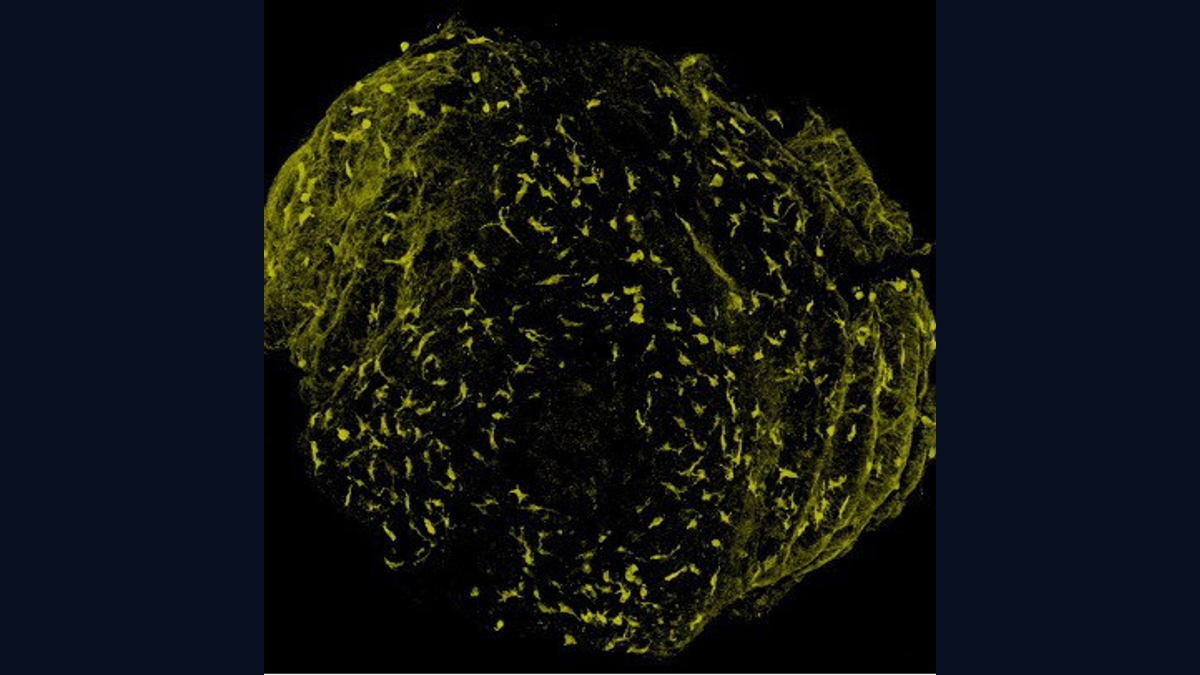
- The manifest includes the final pair of ISS Roll-Out Solar Arrays and research involving brain tissue, crops, in-orbit diagnostics and antibiotic-resistant bacteria.
- Spaceflight Now reports Dragon separated from the upper stage and booster B1096 landed at Landing Zone 40 after its eighth flight.
- Docking, cargo installation and experiment outcomes remain unconfirmed future milestones.
What Happened
The canonical CRS-35 page has moved from a launch preview to a verified mission update. NASA says Falcon 9 launched Cargo Dragon from Cape Canaveral Space Force Station at 6:33 a.m. EDT on October 13. The agency describes Dragon as carrying more than 6,300 pounds of science, supplies and station hardware.
Spaceflight Now independently reports that booster B1096 returned to Landing Zone 40 and that Cargo Dragon separated from the Falcon 9 upper stage to begin its trip to the station.
What Is Confirmed
- Launch: 6:33 a.m. EDT (10:33 UTC) on October 13 from SLC-40.
- Cargo: NASA states that Dragon carries more than 6,300 pounds of supplies and hardware.
- Solar arrays: The cargo includes the final pair of ISS Roll-Out Solar Arrays.
- Dragon separation: Independent launch reporting says spacecraft C211 separated from the upper stage.
- Booster landing: B1096 landed at Landing Zone 40 after its eighth flight.
- Research: NASA previously described health and biology investigations included in the mission manifest.
What Remains Unconfirmed
The launch record does not yet confirm Dragon docking, transfer of cargo into the station, installation of the solar arrays or successful research results. Those milestones require later NASA or station-program confirmation.
This update also does not infer a Tesla product, Starlink service or consumer availability change from the mission.
Why It Matters
CRS-35 combines routine station resupply with a final major power-system delivery. NASA says the last iROSA pair is part of the program to augment the station’s electrical generation for current operations and eventual deorbit planning.
The mission also carries experiments that use microgravity to study biological processes and diagnostic tools that cannot be reproduced in exactly the same way on Earth.
What Tesla Owners Should Know
- This is SpaceX and NASA news. It does not change Tesla vehicle software, charging, service or availability.
- The launch is complete. Earlier references to a 10:33 UTC target now describe the completed liftoff time.
- Docking is separate. Wait for NASA confirmation before treating arrival at the station as complete.
- No Starlink inference is warranted. Cargo Dragon carried station supplies, not a Starlink deployment.
- No Related Gear is included. The mission has no verified match to Tesstudio’s vehicle-accessory catalog.
Tesstudio Analysis
This same-event update scores 88.6. NASA supplies readable primary confirmation for launch time, cargo mass and the mission’s major hardware, while Spaceflight Now independently confirms Dragon separation, booster identity and landing. Updating the existing page avoids a duplicate and preserves the event’s progression from preview to launch.
Our view: the evidence now supports a launch-success headline, but not a docking-success or experiment-success claim. The next material update should follow a readable NASA confirmation of Dragon’s arrival at the station.
Related Tesla News Resources
Follow the Tesstudio Tesla News hub for verified SpaceX, Starlink and Tesla developments.
Sources & Reporting Notes
- NASA: Science, cargo launch on CRS-35 — primary October 13 confirmation of liftoff, cargo mass and station-bound mission status.
- NASA: CRS-35 mission overview — primary manifest, vehicle, solar-array and mission-context record.
- NASA Science: CRS-35 health research — primary research descriptions and source of the second visual.
- Spaceflight Now: SpaceX launches NASA science and cargo — independent launch, Dragon-separation and booster-landing report.
Reporting note: NASA controls the launch, cargo and mission-status claims. Spaceflight Now independently corroborates the flight milestones. Both visuals are NASA public-record assets resized without generative alteration.
Update & Correction Log
October 12, 2026 (America/Los_Angeles): Initial Verified Brief published as a launch preview.
October 13, 2026: Reframed the page after NASA confirmed liftoff and the station-bound cargo mission. Added independent confirmation of Dragon separation and B1096’s landing; docking and research outcomes remain pending.


Laisser un commentaire
Ce site est protégé par hCaptcha, et la Politique de confidentialité et les Conditions de service de hCaptcha s’appliquent.