
Owner Brief: Jump Starting a Tesla Model X Low-Voltage Battery
Owner Brief · Readable Tesla Primary Documentation
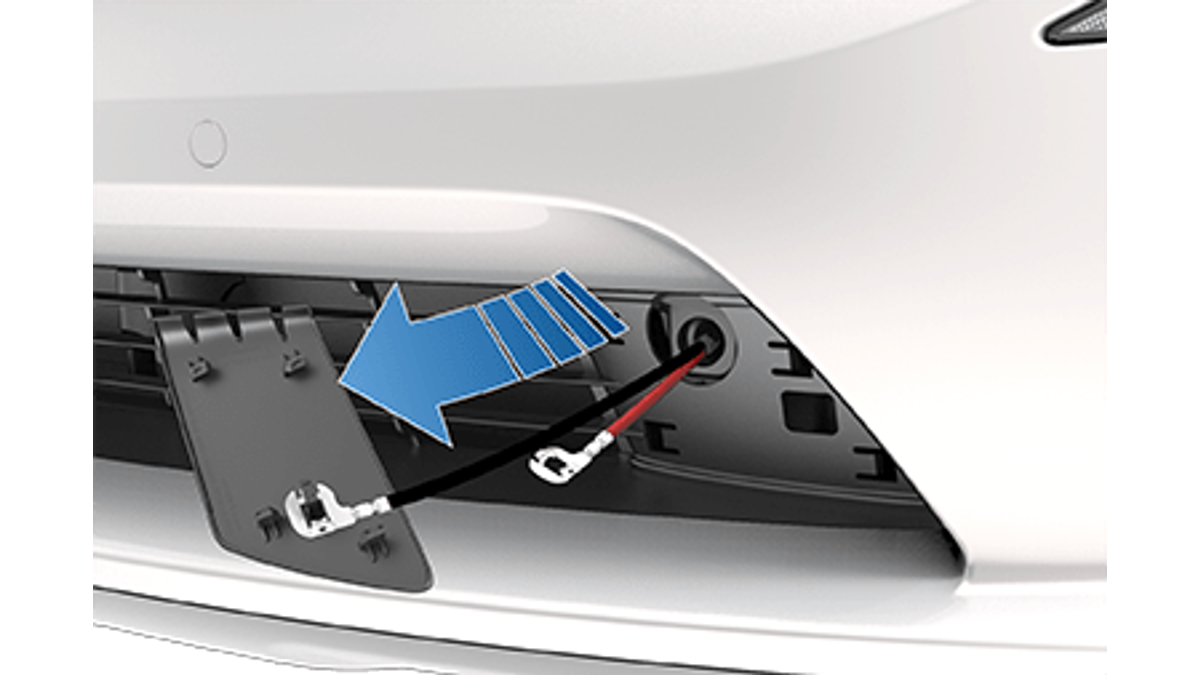
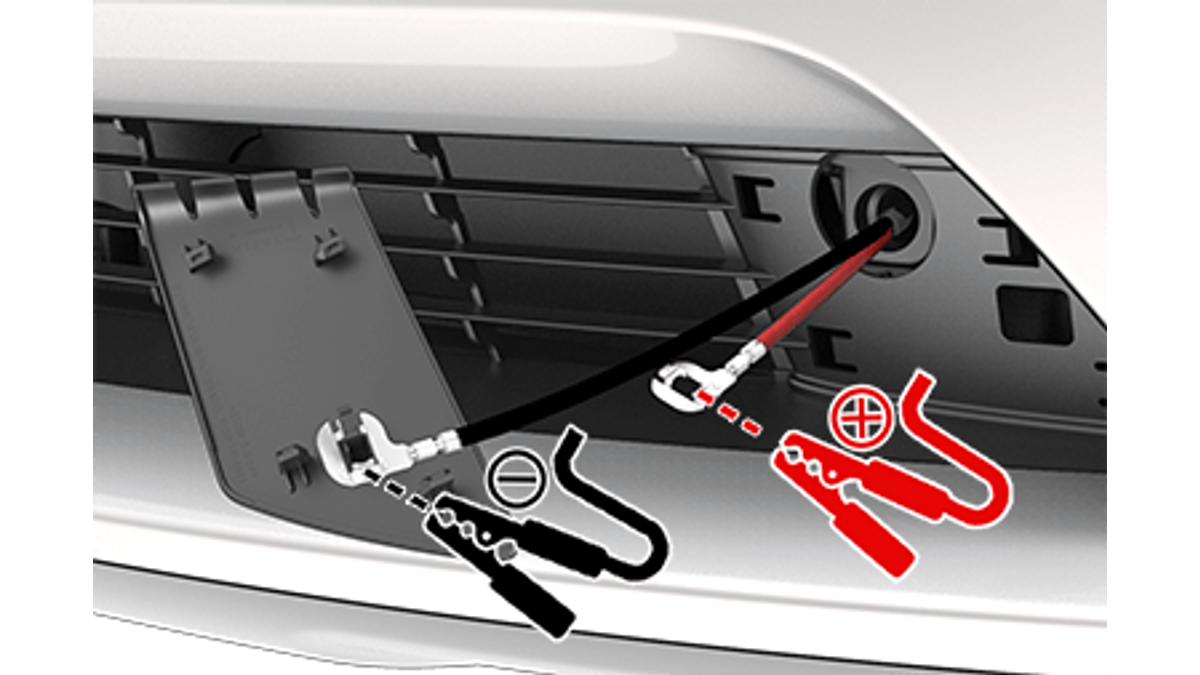
For a Tesla Model X low-voltage jump start, first open the hood if needed, then use the under-hood positive jump post and specified ground in Tesla’s current guide. The tow-eye terminals shown here only release the hood latches. Avoid short circuits, disconnect the black negative cable first, and never use Model X to jump-start another vehicle.
30-Second Brief
- This Owner Brief is dated October 22, 2026 in America/Los_Angeles. It summarizes current Tesla Model X DIY documentation and does not claim the procedure changed today.
- Tesla’s no-power hood-release terminals and the under-hood jump-start points serve different purposes.
- The front tow-eye terminals release the hood latches only. Tesla says they cannot charge the low-voltage battery and should be disconnected within 30 seconds after the hood opens.
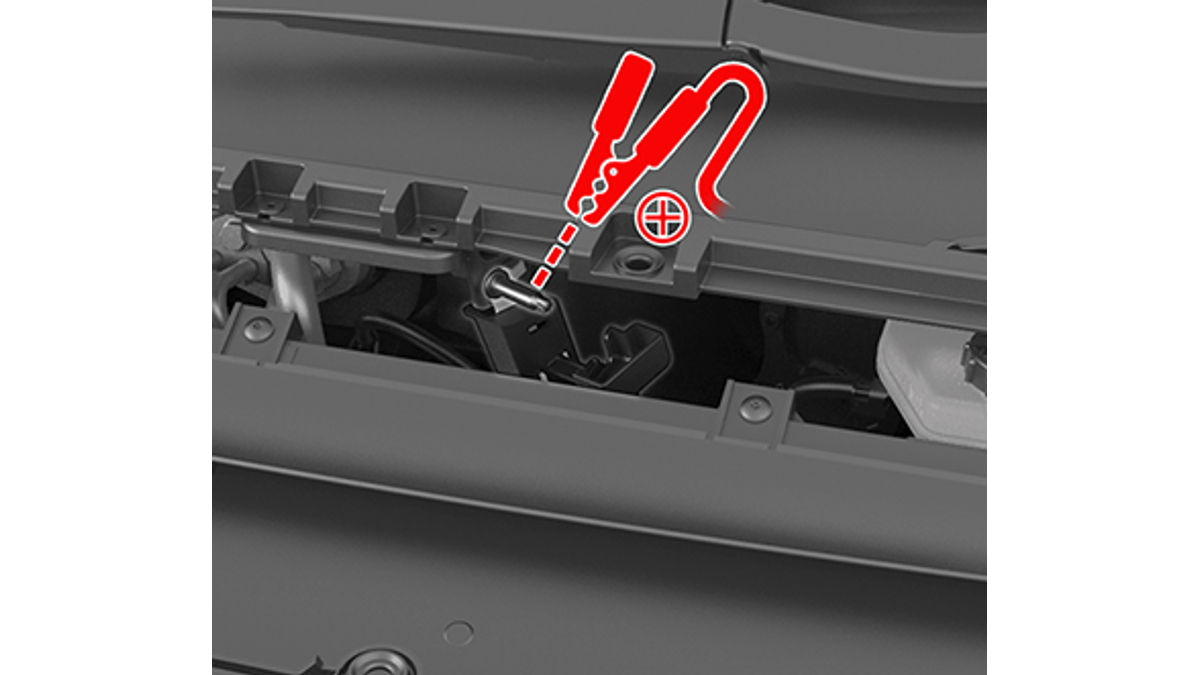
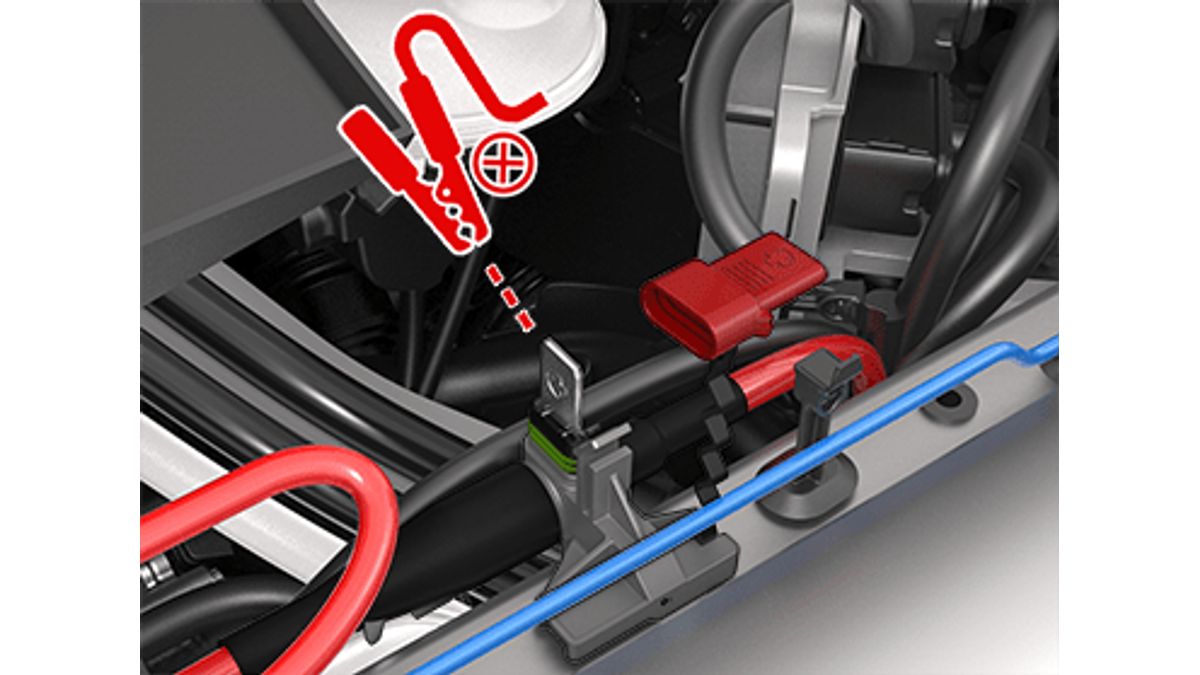
- For the jump start, Tesla directs owners to remove the maintenance panel, disengage the low-voltage battery connector housing, then use the covered positive jump post and the specified ground point.
- Tesla says the positive-post cover and location can differ slightly by manufacture date, including a pre/post approximately January 2023 distinction.
- Tesla warns against short circuits and says Model X cannot be used to jump-start another vehicle.
What Happened
Tesla maintains current Model X DIY pages for two linked recovery steps: opening the hood when low-voltage power is unavailable, and supplying external low-voltage power at the under-hood jump points. The pages make an important distinction that is easy to miss during a roadside problem: the wires behind the front tow-eye cover are latch-release terminals, not battery charging points.
This brief enters Tesstudio’s mandatory fallback ladder after five complete no-publication hours while the Los Angeles daily count remains below four. Same-window items were duplicates, future events, recaps or below a non-negotiable evidence gate, so the workflow expanded to high-value current owner guidance without presenting it as breaking news.
What Is Confirmed
- Hood-release boundary: the front tow-eye terminals release the hood latches only and do not charge the low-voltage battery.
- Hood-release timing: Tesla says not to leave those cables connected for more than 30 seconds and to remove them as soon as the hood unlatches.
- Under-hood preparation: remove the maintenance panel, lift the connector locking tab and pull the low-voltage battery connector housing to the left to disengage it.
- Positive connection: Tesla directs the red cable to the covered red positive jump post under the hood. The cover and post location may differ slightly by manufacture date.
- Negative connection: Tesla directs the black cable to the vehicle ground shown in its guide, not to an arbitrary metal component.
- Wake-up time: Tesla says the touchscreen may take several minutes to receive enough power to wake.
- Disconnect order: when external support is no longer required, remove the black negative cable first, then restore the connector housing and locking tab.
- Damage prevention: Tesla warns against reversed or shorted leads and against allowing the positive cable to touch other metal components.
What Remains Unconfirmed
A successful wake-up does not identify why the low-voltage system became unavailable, prove the battery is healthy or guarantee the vehicle is ready to drive. Persistent alerts, repeat failures or a vehicle that will not enter Drive require diagnosis rather than repeated jump-start attempts.
Tesla’s page does not say that every portable power supply is compatible with every Model X configuration. Owners must follow both Tesla’s live procedure and the external supply manufacturer’s instructions. Build date and regional configuration can also affect access details.
Why It Matters
Confusing the tow-eye latch-release wires with the under-hood jump points can lead to an ineffective or unsafe recovery attempt. Tesla explicitly separates the two steps: one opens the hood; the other supplies low-voltage power to wake the vehicle.
The guide also adds a model-specific connector step before power is applied. That is why a generic “red to positive, black to ground” summary is not enough. Owners should keep Tesla’s live Model X instructions open and follow the exact sequence for their vehicle.
What Tesla Owners Should Know
- Open the live Model X guide. Confirm the procedure applies to the vehicle and region.
- Separate hood release from jump start. Use the tow-eye terminals only to unlatch the hood, then move to the under-hood instructions.
- Respect the 30-second hood-terminal limit. Remove those temporary leads as soon as the latches release.
- Prepare the battery connector exactly as Tesla shows. Lift the lock tab and disengage the connector housing before attaching the jump supply.
- Protect the positive lead. Tesla calls for a dry cloth over nearby metal beams and warns against contact with other metal components.
- Use the documented ground. Do not substitute an arbitrary point.
- Allow time to wake. The touchscreen may take several minutes after the external supply is turned on.
- Disconnect black first and restore the connector. Re-engage the connector housing, push down the lock tab and reinstall the maintenance panel.
- Escalate repeat failures. Preserve alerts and contact Tesla service or roadside assistance if the problem returns or the car remains unavailable.
Tesstudio Analysis
This Owner Brief scores 72.8. Source authority and factual confidence are high because two readable Tier 0 Tesla DIY pages define the hood-release boundary, under-hood connection sequence, electrical cautions and cable-removal order. Event magnitude and timeliness are lower because this is standing owner guidance, not a newly announced change.
The main value is procedural separation. The emergency hood-release terminals are a short-duration access tool. The actual recovery connection is under the hood and includes connector-handling steps that should not be replaced by generic jump-start advice.
Related Tesla News Resources
For the separate first access step, see Tesstudio’s Model X no-power front-trunk Owner Brief. For a related recovery decision, see the Tesla roadside assistance explainer. No Related Gear module is included because the evidence does not establish one universally compatible jump starter.
Sources & Reporting Notes
- Tesla Model X DIY — Jumpstarting the Low Voltage Battery — primary instructions for connector preparation, positive and negative connection points, wake-up timing, cautions and disconnect order.
- Tesla Model X DIY — Opening the Hood with No Power — primary boundary showing that the front tow-eye terminals release the hood but do not charge the low-voltage battery.
Reporting note: Both Tesla pages were read through the project’s approved lightweight source verifier before publication. The two diagrams are Tesla manual assets fitted to 1200-by-675 canvases without factual alteration. Community and video posts were reviewed only as interest signals and are not used as evidence.
Update & Correction Log
October 22, 2026: Initial Owner Brief, published in mandatory sixth-hour fallback mode with the America/Los_Angeles daily count below four.


اترك تعليقًا
This site is protected by hCaptcha and the hCaptcha Privacy Policy and Terms of Service apply.