
Verified Brief: SpaceX Opens Free Space Safety Platform to Satellite Operators
Verified Brief · Starlink Primary Documentation
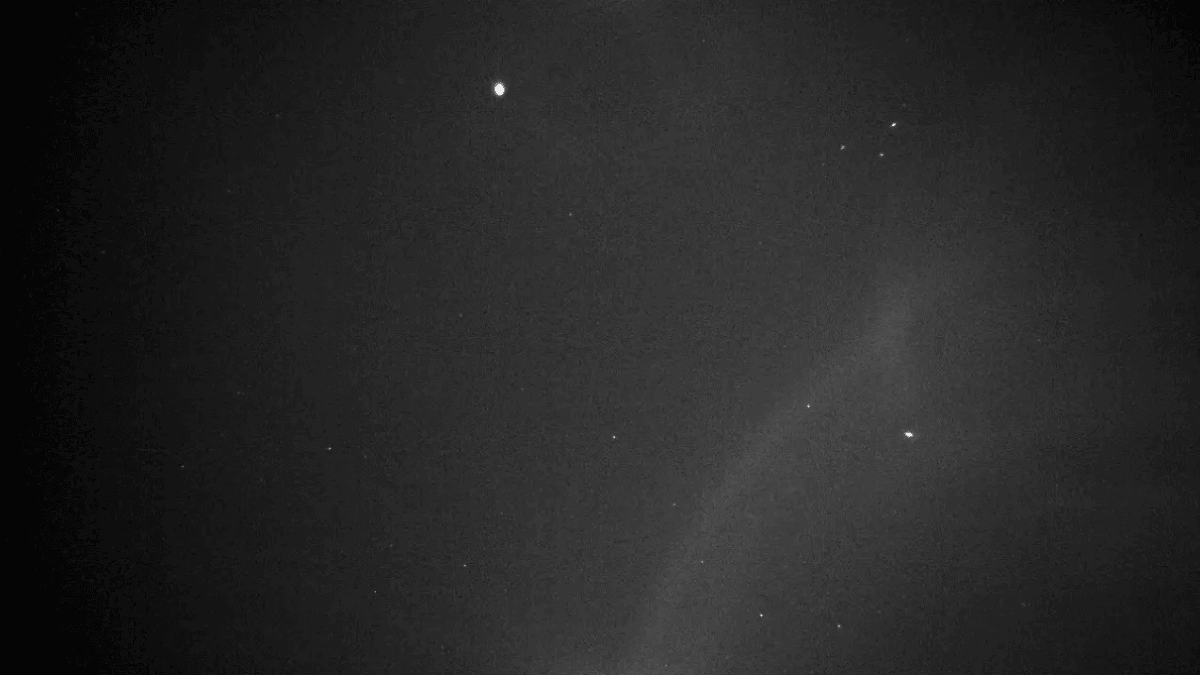
SpaceX has opened the Starlink Space Safety platform to participating satellite operators. Official documentation describes free ephemeris sharing, rapid conjunction screening and collision-risk data backed by the Stargaze sensor network, with results typically returned in less than a minute.
30-Second Brief
- Starlink’s Space Safety platform is live for participating satellite operators, with a public sign-up path and technical documentation.
- Starlink says the service is always free of charge to participating operators.
- Operators can share spacecraft trajectories and receive conjunction screening against submitted data and Stargaze observations.
- Official documentation says screening results are typically available less than a minute after a trajectory submission.
- SpaceNews reported from an August 24 Small Satellite Conference session that the system is already receiving data from more than 30 operators covering more than 700 objects; those figures are SpaceX-reported.
What Happened
SpaceX used a side meeting at the Small Satellite Conference on August 24 to explain a new public-facing stage of its Space Safety service. SpaceNews reported the presentation on August 25, while the live Starlink platform and its documentation provide the primary record for what the service offers.
The service lets participating operators upload ephemerides—predicted spacecraft trajectories—and screens those trajectories for possible close approaches. Starlink says its pipeline can compare submitted data with other operator data and observations from Stargaze, the optical space-situational-awareness system hosted on Starlink satellites.
What Is Confirmed
- Free participation: Starlink documentation calls the platform “always free of charge” to participating spacecraft operators.
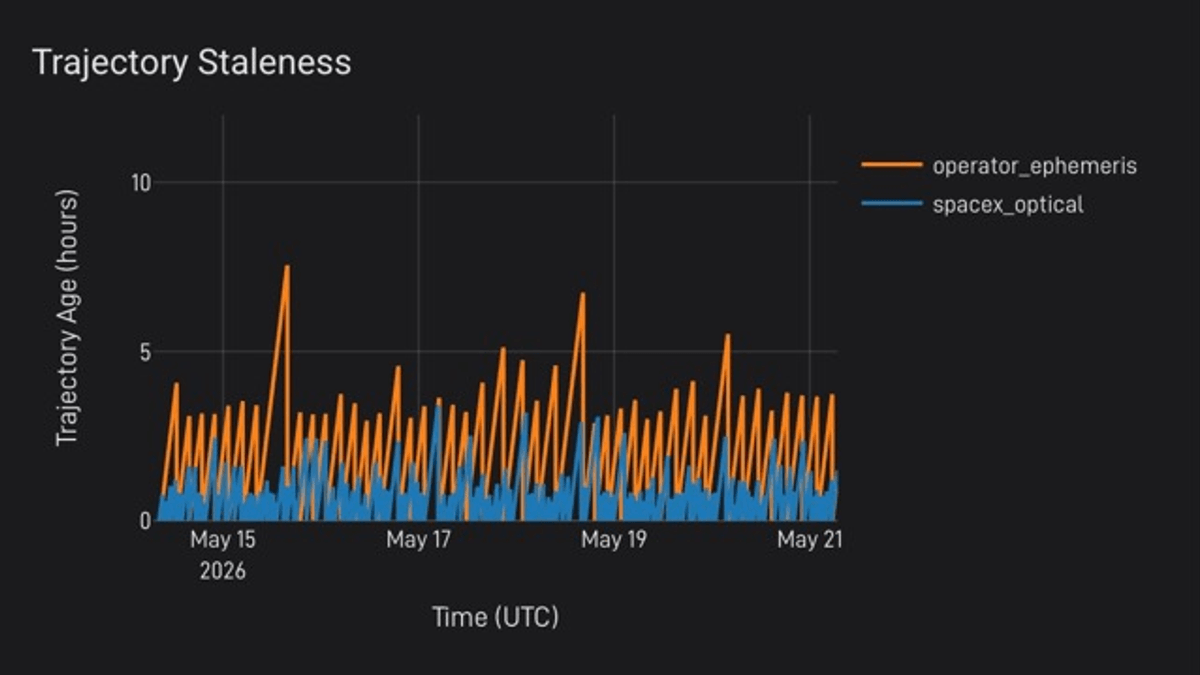
- Low-latency screening: official documentation says results are typically available less than a minute after trajectory submission.
- Shared inputs: screening uses user-submitted ephemerides and Stargaze observations.
- Operator access: API use is currently limited to satellite operators, who must contact the SpaceX onboarding address listed in the documentation.
- Starlink data cadence: the documentation says Starlink GNSS states in the system are updated hourly.
- Current participation: SpaceNews quotes a SpaceX engineer saying more than 30 operators had provided data for more than 700 objects during the prior week. These are company-reported figures from the conference presentation.
What Remains Unconfirmed
The public record does not establish that Space Safety can replace every government, radar or commercial tracking system. SpaceNews quotes SpaceX saying Stargaze is not a standalone radar replacement and cannot detect all small satellites or debris. The useful claim is narrower: SpaceX is offering a complementary screening and coordination platform.
The cited sources also do not publish an independent accuracy audit for every object, orbit or conjunction result. Operators still need their own mission rules, data-quality checks and coordination procedures.
Why It Matters
Low Earth orbit is becoming more crowded, and collision avoidance depends on fresh trajectory data. A platform that accepts frequent operator updates and returns screening results quickly can reduce the delay between a planned maneuver and the warnings available to other operators.
SpaceX also has a direct operational incentive: Starlink is the world’s largest active satellite constellation. Making coordination tools free may encourage more operators to share trajectories, while Stargaze gives the service an additional observation source beyond operator submissions.
What Tesla Owners Should Know
- No Tesla vehicle action is required. This is a SpaceX/Starlink satellite-operations service, not a Tesla recall, software release or charging change.
- It is not a consumer Starlink feature. Platform and API access are currently for satellite operators.
- No internet-service change is implied. The announcement does not change residential availability, plan pricing or speeds.
- Free does not mean unrestricted. Participation requires onboarding and ephemeris sharing; the public documentation describes an operator workflow.
- No Related Gear is included. The service has no strong verified connection to Tesstudio’s vehicle-accessory catalog.
What is Starlink’s Space Safety platform?
It is a free service for participating satellite operators to share ephemerides, screen planned trajectories for possible close approaches and receive conjunction data informed by operator submissions and Starlink’s Stargaze optical observations. Starlink says results are typically available in less than a minute.
Tesstudio Analysis
This event scores 82. It has a readable Tier 0 platform, detailed official documentation and independent reporting from a specialist outlet at the August 24 industry meeting. The score stays below the upper breaking range because the service is specialized and the performance figures are primarily company-reported rather than independently audited.
Our view: the most important feature is the exchange design, not a single tracking statistic. Satellite operators receive more useful warnings when planned trajectories are shared promptly. SpaceX’s system creates an incentive to share by coupling free screening with Stargaze-derived observations, but it should be treated as one layer in a broader space-safety process.
Related Tesla News Resources
Follow the Tesstudio Tesla News hub for verified SpaceX, Starlink, Starship, Tesla and xAI updates.
Sources & Reporting Notes
- Starlink: Space Safety Platform — primary company interface for the service, feature descriptions and sign-up path.
- Starlink: Space Safety Platform Documentation — primary documentation for pricing, operator eligibility, data sharing, screening latency and Starlink GNSS update cadence.
- Starlink: Stargaze Update — primary company background on the optical observation system supporting the platform.
- SpaceNews: SpaceX offers space safety service for satellite operators — independent August 25 reporting from the August 24 Small Satellite Conference presentation.
Reporting note: Product capabilities and participation figures are attributed to Starlink or the SpaceX engineer quoted by SpaceNews. The article does not claim that Stargaze replaces other tracking systems or that the service changes consumer Starlink plans. Both images are official Starlink Space Safety assets resized without generative alteration.
Update & Correction Log
August 25, 2026: Initial publication. The brief confirms the platform’s operator-only onboarding, free participation, ephemeris sharing and stated sub-minute screening target while preserving the limits described by SpaceX and SpaceNews.


اترك تعليقًا
This site is protected by hCaptcha and the hCaptcha Privacy Policy and Terms of Service apply.