
SpaceX Launches 21 SDA Data Transport Satellites After Countdown Abort
Confirmed · SpaceX Primary Source · October 10, 2026
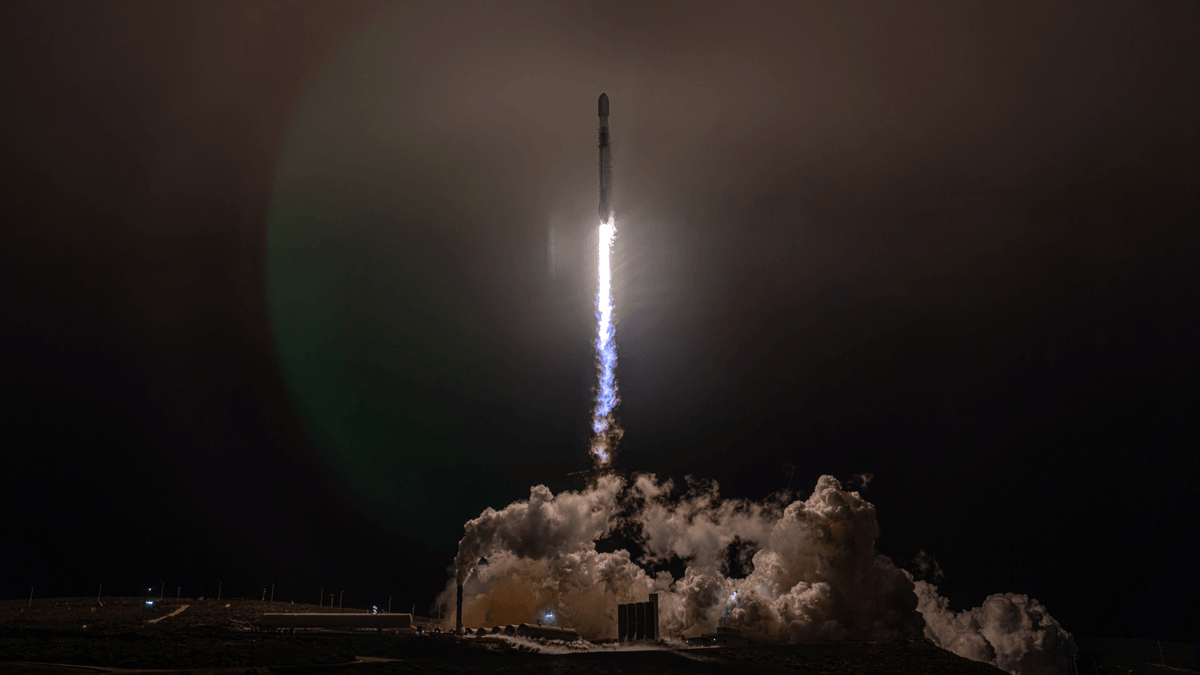
The SpaceX SDA Tranche 1 launch lifted off from Vandenberg SLC-4E at 12:39 a.m. PT on October 10. SpaceX says Falcon 9 delivered 21 SDA data transport satellites, while booster B1103 completed its sixth flight and returned to Landing Zone 4.
30-Second Brief
- SpaceX launched the Space Development Agency’s fourth Tranche 1 data transport mission on October 10 at 12:39 a.m. PT (07:39 UTC).
- Falcon 9 carried 21 data transport satellites into low-Earth orbit for the fourth orbital plane in SDA’s proliferated architecture.
- The first-stage booster, B1103, completed its sixth flight and landed at Landing Zone 4.
- The successful attempt followed an October 5 auto-abort at T−58 seconds and several daily schedule moves.
- SpaceX’s public mission page confirms the launch and booster return; it does not provide a satellite-by-satellite health report.
What Happened
SpaceX launched the SDA mission from Space Launch Complex 4 East at Vandenberg Space Force Base early Saturday. The official mission record says liftoff occurred at 12:39 a.m. Pacific time on October 10, after an earlier October 5 attempt stopped automatically with 58 seconds remaining.
The Falcon 9 flew south from California. SpaceX says the rocket delivered 21 data transport satellites that make up the fourth orbital plane in the Space Development Agency’s Proliferated Warfighter Space Architecture. Independent launch coverage from Spaceflight Now confirms liftoff and the first-stage return.

What Is Confirmed
- Launch time: October 10, 2026 at 12:39 a.m. PT (07:39 UTC).
- Launch site: SLC-4E at Vandenberg Space Force Base, California.
- Payload: 21 SDA data transport satellites forming the fourth orbital plane in the agency’s proliferated low-Earth-orbit architecture.
- Booster: B1103 flew for the sixth time.
- Recovery: SpaceX says the first stage landed at Landing Zone 4 about seven and a half minutes after liftoff.
- Prior attempt: The October 5 countdown was halted at T−58 seconds after off-nominal Stage Two data, according to SpaceX’s launch commentary quoted by Spaceflight Now.
What Remains Unconfirmed
SpaceX’s public mission record does not provide a spacecraft-by-spacecraft deployment list, commissioning status, or on-orbit health assessment. This update therefore does not claim that every individual satellite has completed checkout or entered operational service.
The page also does not publish a detailed engineering root-cause report for the October 5 automatic abort. SpaceX said additional time was used for vehicle-system checks and range coordination, but that is not the same as a public technical fault analysis.
Why It Matters
The mission adds the fourth orbital plane of Tranche 1 transport spacecraft. SDA describes the Transport Layer as an optically interconnected mesh intended to move military data with resilient, low-latency links; SpaceX identifies this flight as the fourth of nine Tranche 1 missions it will launch for the agency.
Operationally, the result closes the loop on a story that began with a final-minute abort. A successful relaunch and booster return are distinct verified outcomes, so updating the existing event page is more useful and less duplicative than publishing a second page about the same mission.
What Tesla Owners Should Know
- No vehicle action is required. This is a SpaceX government-satellite launch, not a Tesla software, charging, recall, pricing, or configuration change.
- Do not infer consumer Starlink availability. The payload supports SDA’s military data architecture and is not described as a consumer broadband batch.
- Use the official mission page for footage. SpaceX’s page contains the primary launch record and webcast access.
Tesstudio Analysis
The key verified change is not another schedule move: the mission flew. The evidence is unusually strong because SpaceX’s own updated mission record names the launch time, payload count, booster history and landing result, while independent launch coverage matches those points.
The remaining reporting boundary is satellite commissioning. “Delivered” on the launch page supports an orbital delivery claim, but not a claim that all 21 spacecraft are healthy, networked or operational. Those later milestones should be added only if SDA or the manufacturers publish a readable follow-up.
Sources & Reporting Notes
- SpaceX — SDA’s Fourth Tranche 1 Mission — primary launch, payload and booster-landing record, updated October 10, 2026.
- Spaceflight Now — SpaceX launches 21 data satellites for the Space Development Agency — independent launch and landing coverage.
- Space Development Agency — On-Orbit Capabilities — primary program context for the proliferated architecture.
- Launch Library 2 — T1TL-A mission record — structured schedule, mission and asset provenance.
Reporting note: Mission facts are attributed to SpaceX or SDA. Tesstudio does not claim individual satellite commissioning without a later primary record.
Update & Correction Log
October 10, 2026: Updated the existing event page after SpaceX confirmed liftoff, delivery of 21 data transport satellites and the first-stage landing at LZ-4. Removed future-launch wording and preserved the distinction between orbital delivery and spacecraft commissioning.
October 6, 2026: Initial verified brief documented the October 5 T−58 automatic abort and the then-current retry target.



اترك تعليقًا
This site is protected by hCaptcha and the hCaptcha Privacy Policy and Terms of Service apply.